NBA legend, five-time champion with the Lakers, and architect of the Mamba Mentality.
Design
- Q20.3
- h34.3
- R26.5
- g18.1
- i17.1
- S24.4
- T15.5
- U7.6
- V52.4
- W4.6
- X1.1
- Y26.1
- Z48.5
Personality
- Q59.1
- h55.1
- R24.4
- g6.5
- i36.5
- S4.4
- T57.2
- U48.3
- V56.2
- W59.4
- X44.6
- Y5.5
- Z48.6
Kobe Bryant was a Manifesting Generator — built to move fast, master relentlessly, and refuse to pick just one thing — and his career reads exactly like that wiring turned all the way up. He went straight from Lower Merion High School to the Los Angeles Lakers in 1996, skipped the entire on-ramp everyone else took, and spent the next twenty years compressing what most players attempt into one lifetime into something denser and stranger.
His 1/3 profile — the investigator who also has to live it, break it, and rebuild it — showed up in the way he studied the game. He watched film obsessively, called Hakeem Olajuwon to learn footwork, borrowed a fadeaway from Jordan, a jab step from Elgin Baylor, a spin move from Oscar Robertson. Then he'd go get his hands dirty and find out what actually worked at 4 a.m. in an empty gym. Air-balling four shots against Utah as a rookie didn't shake him; he flew straight to a high school gym in Pacific Palisades that night and shot until sunrise. Every failure was just raw material for the next iteration.
The Mamba Mentality was, in practice, Gate 34 vitality turned into a lifestyle — pure power channeled into whatever lit him up, and nothing else allowed in the room. He'd famously arrive hours before teammates, run stadium stairs in the offseason, and treat mundane practice reps as sacred rituals that anchored the whole operation. When he wanted the ball at the end of a game, it wasn't ego so much as the kind of gut certainty that doesn't ask permission — something showed up, his body said yes, and he went.
He was also emotionally volatile in ways that shaped the arc of his career. The feud with Shaq, the trade demand in 2007, the icy stretches with teammates — these were decisions made in the middle of the wave rather than after it passed, and he sometimes paid for it. But he had a real capacity to walk through crisis and come out reshaped: the 2003 Colorado case, the post-Shaq rebuild, the torn Achilles in 2013 that he responded to by calmly shooting the free throws before limping off. He kept surrendering to the next version of himself.
His voice on the court and in interviews carried the weight of someone saying exactly what needed to be said in that moment, and in retirement he pivoted with the same speed that defined his playing career — winning an Oscar for Dear Basketball, building a media company, and becoming a devoted girls' basketball coach. He was a natural storyteller who could make his own experience into a lesson for anyone willing to listen, and he had strong instincts about the potential hiding inside other players, particularly the young women he mentored.
The helicopter crash in January 2020 that killed him, his daughter Gianna, and seven others cut short what was clearly a second act as expansive as the first. What he left behind was a template — obsessive, non-linear, occasionally difficult, always fully committed — for creating something original by refusing to do it anyone else's way.
Sources: biography · birth data
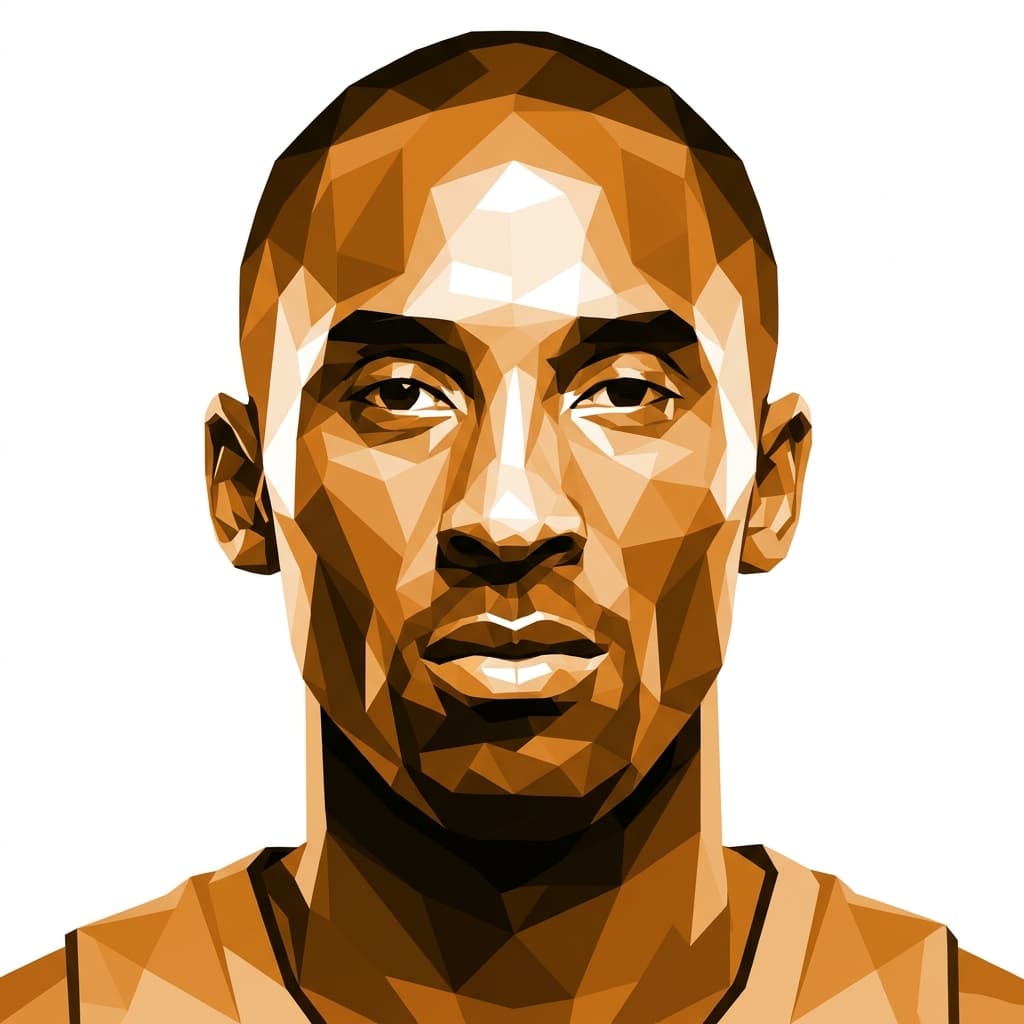
What do you and Kobe Bryant have in common?
Enter your birth details to find out