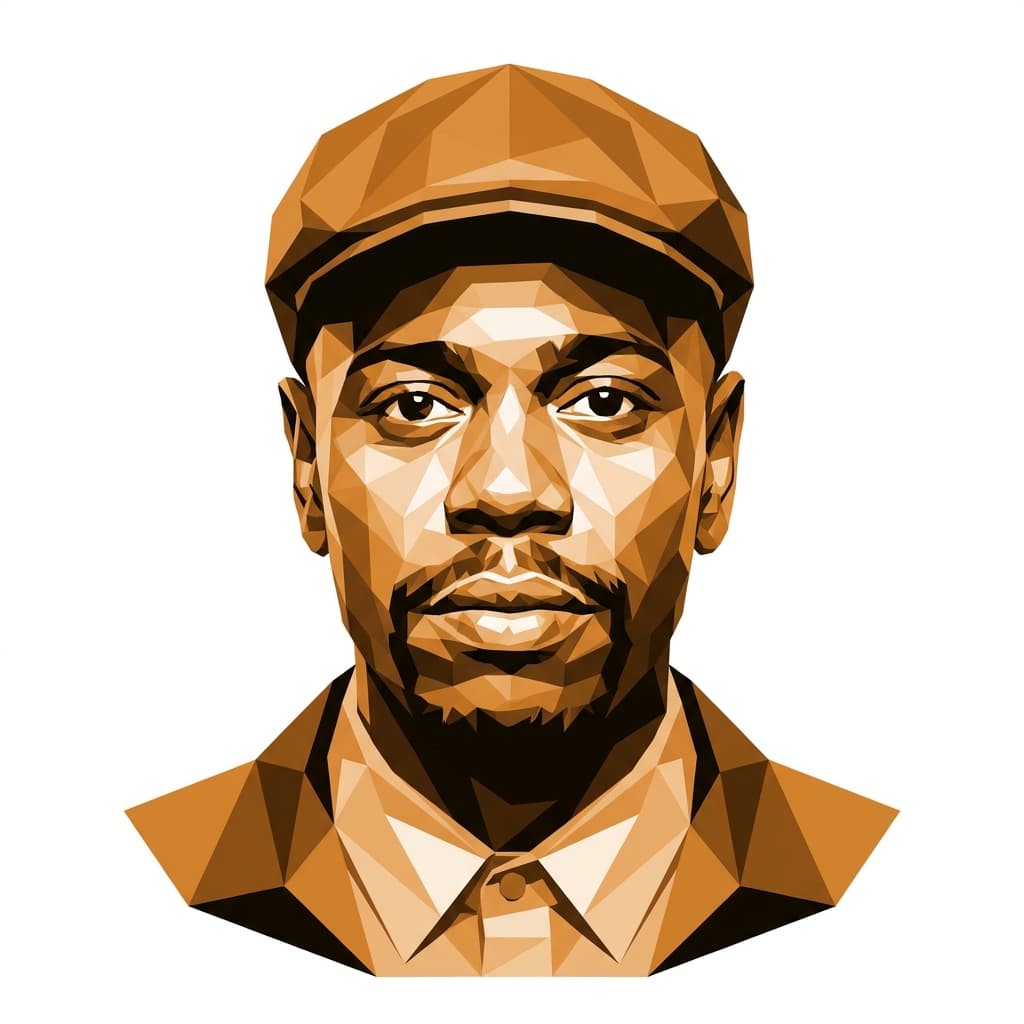
American stand-up comedian and cultural commentator known for Chappelle's Show and his uncompromising live performances.
Design
- Q20.4
- h34.4
- R49.6
- g58.5
- i52.5
- S16.3
- T35.4
- U63.1
- V19.5
- W45.5
- X57.5
- Y9.1
- Z46.4
Personality
- Q59.2
- h55.2
- R39.4
- g58.3
- i52.3
- S4.4
- T18.3
- U27.3
- V41.3
- W15.5
- X57.6
- Y34.5
- Z46.6
Dave Chappelle is a Manifesting Generator — built for bursts of intense creative output followed by abrupt pivots, and his career has obeyed that rhythm whether the industry wanted it to or not. He started doing stand-up in Washington, D.C. clubs at fourteen, was bombing and learning at the Apollo by sixteen, and by his twenties had a film career (Half Baked, The Nutty Professor), a sketch show on Comedy Central, and a reputation as one of the sharpest minds in the room. Then, famously, he walked away.
The walk-away is the part of the story everyone tells, but it makes sense as the slow, sleep-on-it kind of clarity catching up with a fast decision. He had signed a $50 million contract for two more seasons of Chappelle's Show and then, mid-production in 2005, flew to South Africa. He told Time he needed to be sure he was "dancing and not shuffling" — that the room laughing at a sketch wasn't laughing at the wrong thing. That is Gate 18's eye for what's actually broken turned, momentarily, on his own work, and Gate 63's refusal to accept an answer that hasn't been tested refusing to let him keep going on autopilot.
He has a 2/4 profile — the hermit who also needs the village — and the Ohio farm he retreated to is the literal expression of it. He raises his kids there, walks the property, and only comes out when he's ready. His comeback wasn't a press tour; it was responding to what showed up rather than chasing it — small unannounced sets at the Comedy Cellar, then a surprise Radio City run, then the Netflix specials that arrived as if from nowhere. The opportunities came through his community of comics, exactly as that profile is built to work.
On stage he is a study in the kind of presence that responds to the room in real time, pacing, smoking, letting a thought arrive before he finishes it. He'll push an audience toward feelings it would rather not have — race, gender, his own contradictions — and then sit in the discomfort with them. His comedy carries a hunger for the next experience to metabolize into a story, which is why his specials keep returning to travel, to people he met, to nights that ran long. He can be absorbed in the craft to the point of merging with it, workshopping a single bit for years until the timing is millimeter-perfect.
The polarizing late-period Chappelle — the Netflix specials that drew protests, the trans material he refuses to retire, the long monologues about cancel culture — reads like a man insisting on his own principles even when the room turns. He's also someone with a real instinct for what a community of comics and neighbors actually needs, which is why his Yellow Springs block parties during the pandemic became legend. He hosts. He feeds people. He puts other comics on. The same energy that carries crowds for three hours without flagging is the one that keeps him up at 4 a.m. on his farm, smoking, working out the next bit.
Sources: biography · birth data
What do you and Dave Chappelle have in common?
Enter your birth details to find out