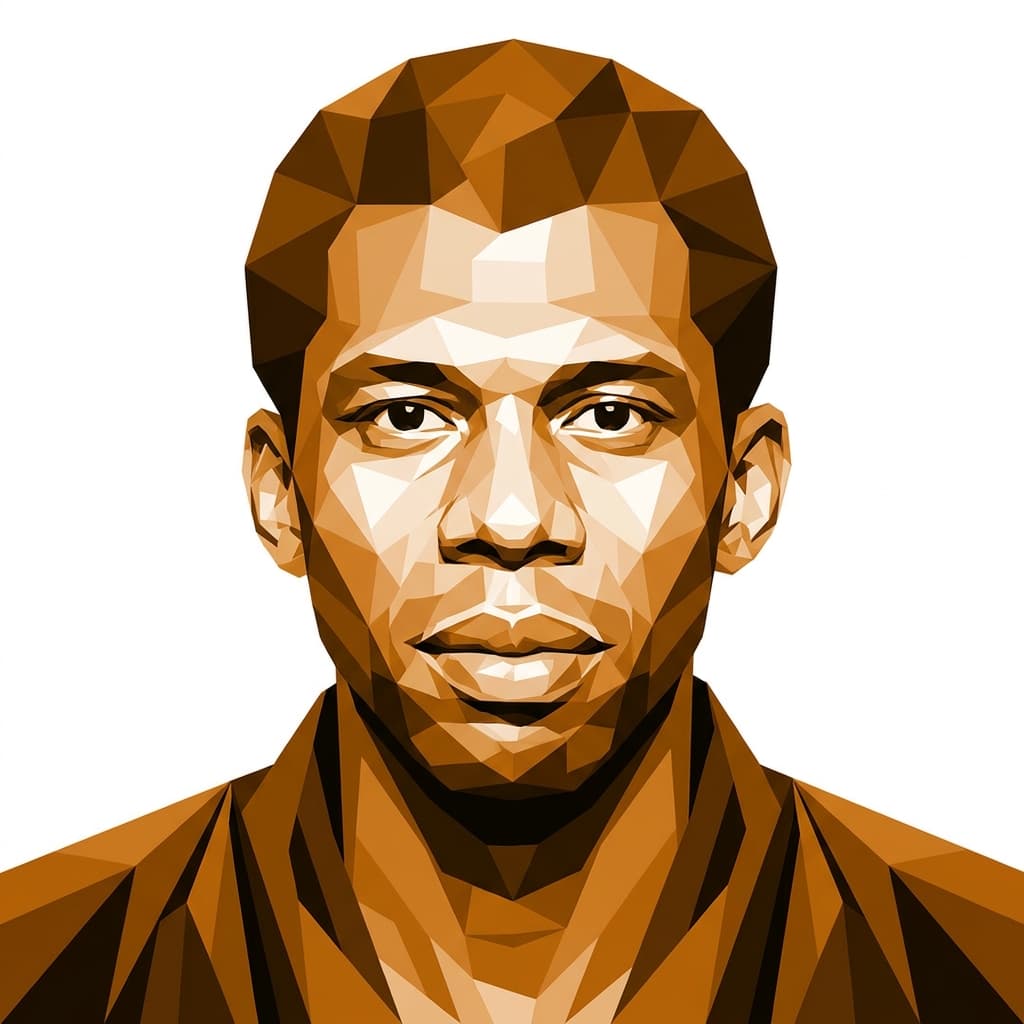
American author of Fahrenheit 451 and The Martian Chronicles, poet of science fiction and small-town nostalgia.
Design
- Q20.2
- h34.2
- R31.5
- g1.3
- i2.3
- S8.4
- T23.2
- U32.2
- V33.5
- W59.6
- X55.6
- Y33.2
- Z52.3
Personality
- Q29.6
- h30.6
- R5.5
- g44.2
- i24.2
- S7.1
- T64.2
- U43.4
- V29.5
- W64.2
- X55.4
- Y33.5
- Z52.5
Ray Bradbury was a Manifesting Generator — wired to write in every direction at once, and he did, producing novels, short stories, screenplays, teleplays, poetry, essays, and opera librettos across seven decades without ever settling into a single lane. He liked to say he wrote every day of his life from age twelve on, banging out a short story a week because he trusted that at least one in fifty-two would be good. That's the metabolism of someone who pursued several passions at once without picking one, fueled by the sheer joy of the making.
He was, by his own account, a Waukegan boy who never really left. The Illinois summers of his childhood — dandelion wine, ravines, small-town Fourth of Julys — became the loam of Dandelion Wine and Something Wicked This Way Comes. His 6/2 profile, the role model and natural hermit, showed up in the pattern of his life: an experimental youth of pulp magazines and carnival memories, a middle stretch of retreating to his basement typewriter, and a late career as the beloved elder statesman of American imagination whose wisdom was drawn from him whenever he was invited to share it. He rarely traveled, famously refused to drive or fly for most of his life, and did his best work in the kind of solitude where insight arrives on its own schedule.
Bradbury made decisions the way a kid grabs a firefly. Fahrenheit 451 was written on a rented dime-a-half-hour typewriter in the basement of UCLA's library over nine days — the kind of full-body yes that doesn't ask for a plan. When something lit him up, he chased it; when it didn't, he wandered off. He liked to tell young writers to "jump off the cliff and build your wings on the way down," which is essentially a Manifesting Generator's strategy of waiting for the spark and then moving fast dressed up as advice.
His sentences carried the distinctive originality of a voice that refused to sound like anyone else, somewhere between Poe, Whitman, and a Midwestern preacher on a summer porch. He was a tastemaker for a generation of readers, the one who pointed at rockets and dinosaurs and said pay attention to this, and he did it with a moral urgency that felt closer to poetry than to science fiction. Fahrenheit 451 was not really about firemen; it was about television, distraction, and what happens when a culture stops reading. He said the true thing early and often, and it kept turning out to be the thing everyone else was thinking but hadn't found words for.
What lasted, past the plots and the awards, was his warmth. Bradbury loved libraries the way other people love churches. He wept openly at the sight of a rocket launch. He answered fan letters into his eighties. He wrote about Mars as if it were a small town on the far side of the ravine, and about the future as a place still worth caring about, hoping for, and warning about. Frustration and satisfaction were both loud in him, but the satisfaction won — he was one of the rare writers who seemed, right up until his death in 2012, genuinely lit up by his own life.
Sources: biography · birth data

What do you and Ray Bradbury have in common?
Enter your birth details to find out