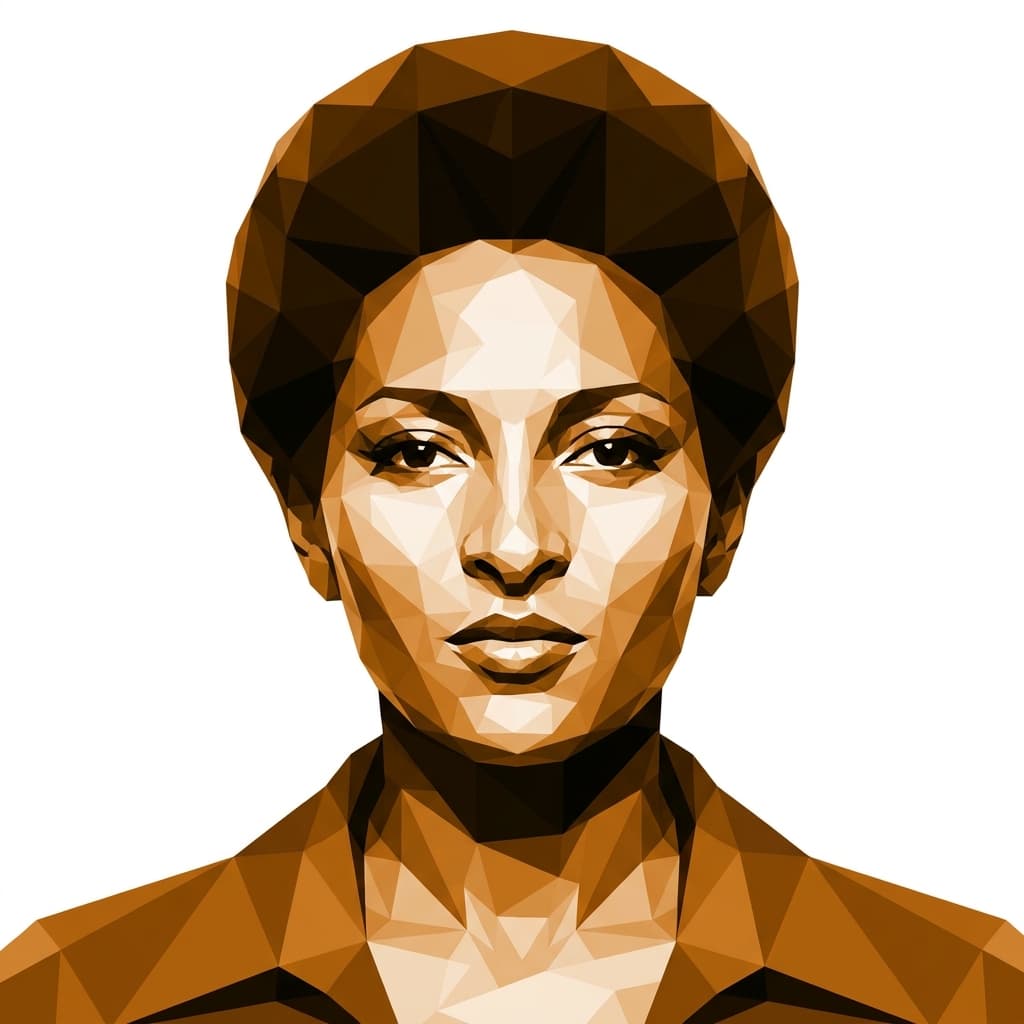
American actress, writer, director, and producer known for Parks and Recreation and documentary filmmaking.
Design
- Q9.3
- h16.3
- R44.2
- g43.4
- i23.4
- S9.4
- T32.3
- U15.1
- V21.6
- W31.1
- X28.4
- Y5.1
- Z48.2
Personality
- Q37.1
- h40.1
- R38.6
- g1.3
- i2.3
- S19.4
- T41.6
- U45.5
- V42.3
- W56.1
- X28.6
- Y5.3
- Z48.2
Rashida Jones is a Manifesting Generator — wired to move fast across a tangle of interests without ever picking just one — and her career has been exactly that shape: actress, screenwriter, director, producer, musician, and occasional essayist, often inside the same calendar year. She grew up in Bel Air as the daughter of Quincy Jones and Peggy Lipton, went to Harvard intending to study law and religion, and emerged with a comparative religion degree before sliding into acting through a side door. The non-linear path isn't a detour from the plan; it is the plan.
Her early television work — Boston Public, then the breakout run as Karen Filippelli and later Ann Perkins on The Office and Parks and Recreation — showed an actress doing something quieter than the comedians around her. She played the warm, grounded center while Amy Poehler and Aziz Ansari bounced off her, the kind of friend the whole group leans on without ever asking why. Behind the scenes she was already writing; she co-wrote Celeste and Jesse Forever with Will McCormack in 2012, casting herself as a woman who can't quite let a marriage end, working a story through to its honest, uncomfortable completion rather than the rom-com landing it wanted.
Then she pivoted. She co-wrote Toy Story 4. She co-created the Black Mirror episode "Nosedive." She directed Quincy, the Netflix documentary about her father, investigating her own family until she had something solid enough to share — that 1/3 instinct to dig to the bottom and then test it in public. She produced Hot Girls Wanted about the amateur porn industry, pursuing a struggle she'd decided was actually worth the fight rather than a safer celebrity vanity project. Each pivot looked abrupt from outside; each one was a gut yes she'd waited for.
She has talked openly about needing time before big decisions — turning down projects she initially wanted, then being relieved she'd waited a week. That's a decision-maker who sleeps on things and trusts the cooler answer. She kept her relationship with Ezra Koenig almost entirely private, announced their son's birth months after the fact, and generally treats public attention as something to exercise careful restraint about, conserving what's worth preserving. The selectivity isn't shyness; it's resource management.
Her on-screen presence carries a specific authority — a voice people listen to when she explains something tricky, whether it's Angie Tribeca's deadpan procedural beats or a New York Times op-ed about online harassment. She brings an instinct for distilling complicated material into something usable, which is why she keeps getting hired to write, produce, and host across wildly different formats. The throughline isn't genre; it's her interest in mastering one craft, then immediately picking up another. She makes a Sound of Metal-style documentary, then a Pixar sequel, then a sitcom, then an algorithm critique, and the only consistent thing is that each project was something she felt genuinely lit up by — and that lit-up energy, more than any career strategy, is what keeps drawing the next call.
Sources: biography · birth data

What do you and Rashida Jones have in common?
Enter your birth details to find out