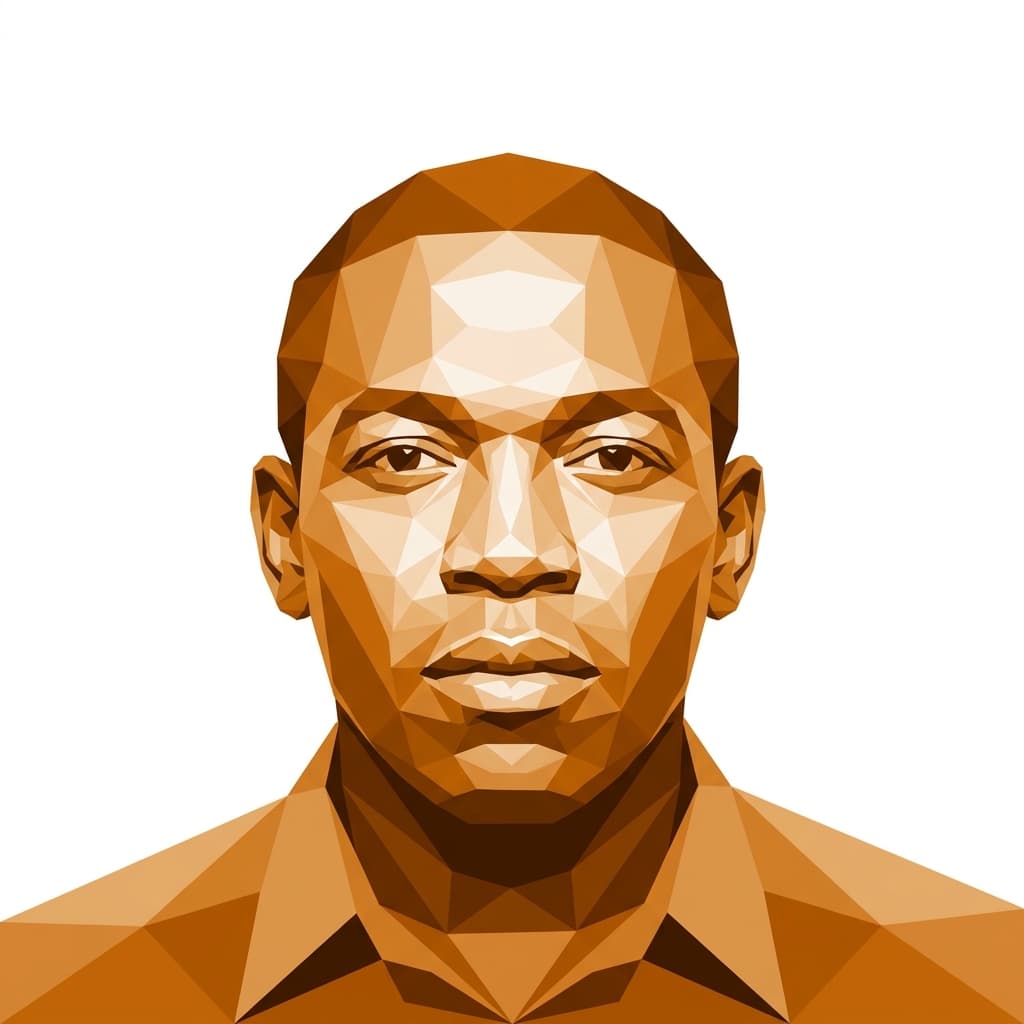
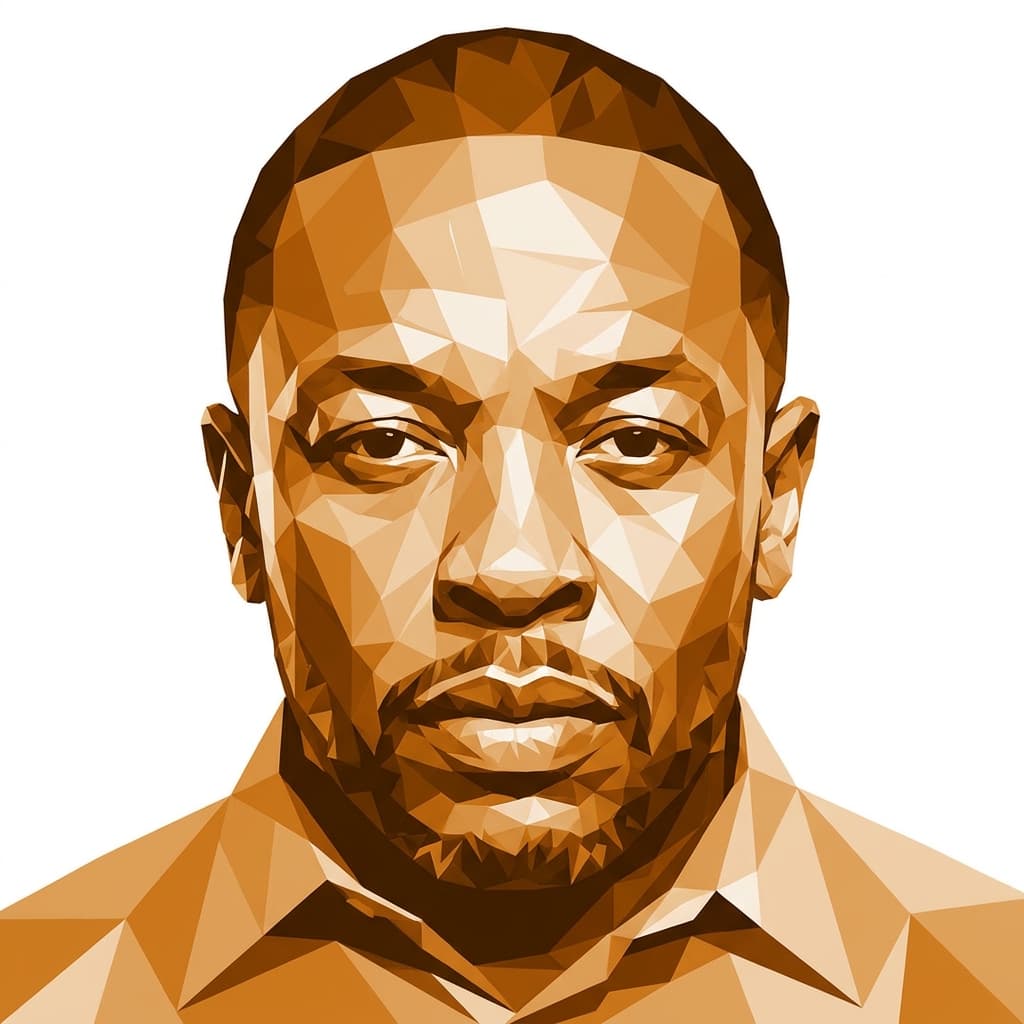
Compton-born producer, rapper, and mogul who architected West Coast hip-hop and built Beats into a billion-dollar empire.
Design
- Q34.2
- h20.2
- R31.3
- g12.1
- i11.1
- S26.6
- T50.3
- U40.4
- V23.1
- W30.5
- X64.4
- Y1.6
- Z64.6
Personality
- Q30.6
- h29.6
- R18.4
- g45.4
- i26.4
- S30.2
- T13.4
- U6.3
- V2.6
- W37.1
- X64.3
- Y43.2
- Z64.5
Andre Young — Dr. Dre — is a Manifesting Generator whose career reads like a series of gut-level yeses followed by very fast execution. From N.W.A. to Death Row to Aftermath to Beats, he has never stayed in one room for long, and he has never done just one thing at a time. The through-line isn't a genre or a business model; it's the pattern of a body that gets bored quickly and moves the moment something in the world lights it up.
He started as a teenager DJing at the Eve After Dark club in Compton, then joined World Class Wreckin' Cru in eyeliner and sequins before pivoting hard into the sound that became gangsta rap. That pivot — leaving behind something that was working to chase something that felt more true — is the 6/2 profile arc in miniature: a messy experimental first act, then a stepping-back to observe what the culture actually needed, then a return as the person everyone quotes. He is famously reclusive between projects, disappearing into the studio for years, which is the kind of solitude that isn't avoidance but recharging.
In the studio, Dre is the archetypal perfectionist — the guy who makes Snoop, Eminem, 50 Cent, and Kendrick Lamar record the same bar forty times until it sits exactly right. That obsessive ear is an instinct for hearing what's not yet correct and refusing to move on, paired with a gift for stripping a track down to only what needs to be there. "The Chronic" and "2001" don't sound busy; they sound inevitable. He famously scrapped the entire "Detox" album because it didn't clear his own bar, which is also the shadow of an emotional wave that never quite settles into yes.
His business instincts are inseparable from his musical ones. He walked away from Ruthless over Jerry Heller, walked away from Death Row over Suge Knight, and both times built something bigger next. Selling Beats to Apple for $3 billion in 2014 was a negotiator's move made by someone who genuinely believed in what he was selling, executed with the deliberate patience of someone who waits for the right offer to appear rather than chasing. He tends to put resources back into the people around him — funding a performing arts high school in Compton, endowing USC's Iovine and Young Academy with Jimmy Iovine.
What makes him a producer other producers study is an ability to see where a sound is going before anyone else can hear it and then find the artist who can carry it. He pulled Eminem out of a demo tape, heard Kendrick on a mixtape, built 50 Cent's whole aesthetic in months. He rarely raps his own verses — Jay-Z, The D.O.C., and others have ghostwritten for him — which is an unusual willingness to let the vision matter more than the credit.
He is a private man in a loud industry, someone who protects a small circle of collaborators fiercely and lets very few people close enough to actually know him. The wisdom of his career is the wisdom of a body that trusted its own timing — that a decade of silence was fine if the next thing was right.
Sources: biography · birth data
What do you and Dr. Dre have in common?
Enter your birth details to find out