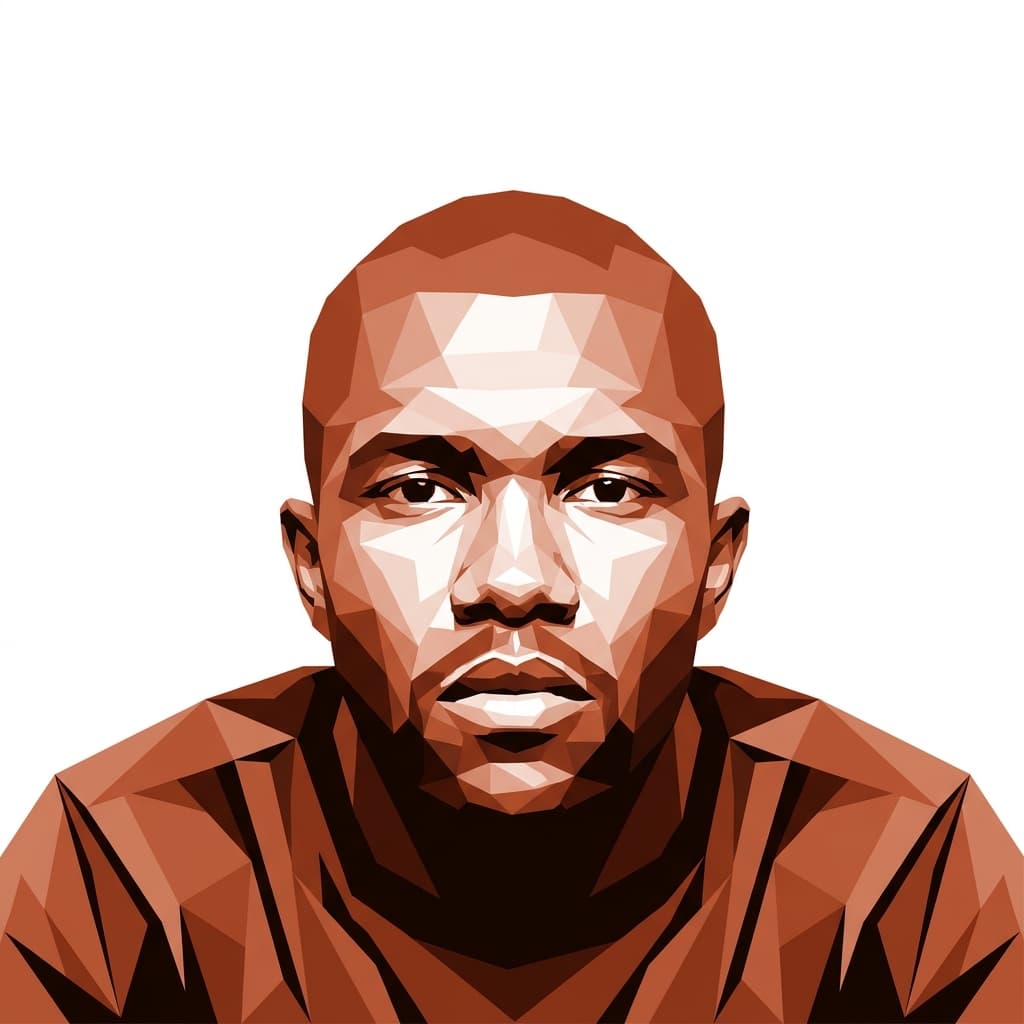
American singer and cultural icon who fused gospel, blues, and country into rock and roll.
Design
- Q57.5
- h51.5
- R5.6
- g41.6
- i31.6
- S1.1
- T48.1
- U29.3
- V50.5
- W49.3
- X3.4
- Y64.3
- Z62.6
Personality
- Q54.3
- h53.3
- R55.3
- g60.6
- i56.6
- S61.2
- T60.4
- U48.4
- V1.6
- W30.2
- X3.2
- Y64.4
- Z62.5
Elvis Presley was a Generator — built for deep, repetitive, physically demanding work, the kind that lets a person master a craft by doing it over and over until the body knows it. He sang gospel in his bedroom as a kid, mowed lawns, drove a truck for Crown Electric, and walked into Sun Records in the summer of 1953 ostensibly to cut an acetate for his mother. He didn't pitch himself. He waited around the studio, hung about, came back. When Sam Phillips finally called him in months later to try a ballad that went nowhere, it was Elvis goofing between takes on "That's All Right" — the kind of yes that arrives from the body, not the plan — that made Phillips stop the tape and ask what on earth he was doing.
His 3/5 profile — the experimental trial-and-error learner who becomes a projected leader — is the whole shape of his career. He bumped his way through styles, labels, managers, and movies, taking hits along with the experiments, and the public projected onto him relentlessly: savior of music, corrupter of youth, King, joke, comeback, casualty. He never quite controlled the projection, only rode it. The 1968 television special, taped in a tight black leather suit after years of mediocre Hollywood pictures, was a man pulling order out of the chaos his career had become, proving on camera that the instrument still worked.
Onstage he carried the raw energy of starting something nobody had quite started before — the curled lip, the leg, the rhythm guitar swung like a prop. He had the bravery to shock a room into a new shape, and in 1956 that meant scandalizing Ed Sullivan's cameramen into framing him from the waist up. Off the bandstand he was governed by Emotional Authority, a wave-rider who needed time and mood to land on decisions, which is part of why Colonel Tom Parker's pressure-cooker management worked on him so thoroughly: the Colonel decided fast, and Elvis, riding his feelings, often deferred.
He was driven, hugely so — an ambition that wanted upward movement and the means to share it — buying Cadillacs for strangers, building Graceland into a compound for family and the Memphis Mafia, sending checks to hospitals he'd never visit. Loyalty to the people he came from was the through-line: his mother Gladys, his father Vernon, the cousins and friends he kept on payroll long after the music had moved on. He believed in the rituals that held a Southern boy together — gospel quartets singing in the den past midnight, the same fried peanut-butter sandwiches, prescription routines that eventually killed him.
What lasts is the voice, and the voice was an instrument of pure feeling that swung from tenderness to tremor without warning — the croon on "Love Me Tender," the desperate gospel pleading on "How Great Thou Art," the late-Vegas baritone cracking through "Suspicious Minds." He told his life in song, and he knew it: a man who could make his own experience feel like everyone's experience. He died at Graceland in August 1977, forty-two years old, exhausted by a body that had stopped being able to wait for clarity. The records keep playing.
Sources: biography · birth data

What do you and Elvis Presley have in common?
Enter your birth details to find out