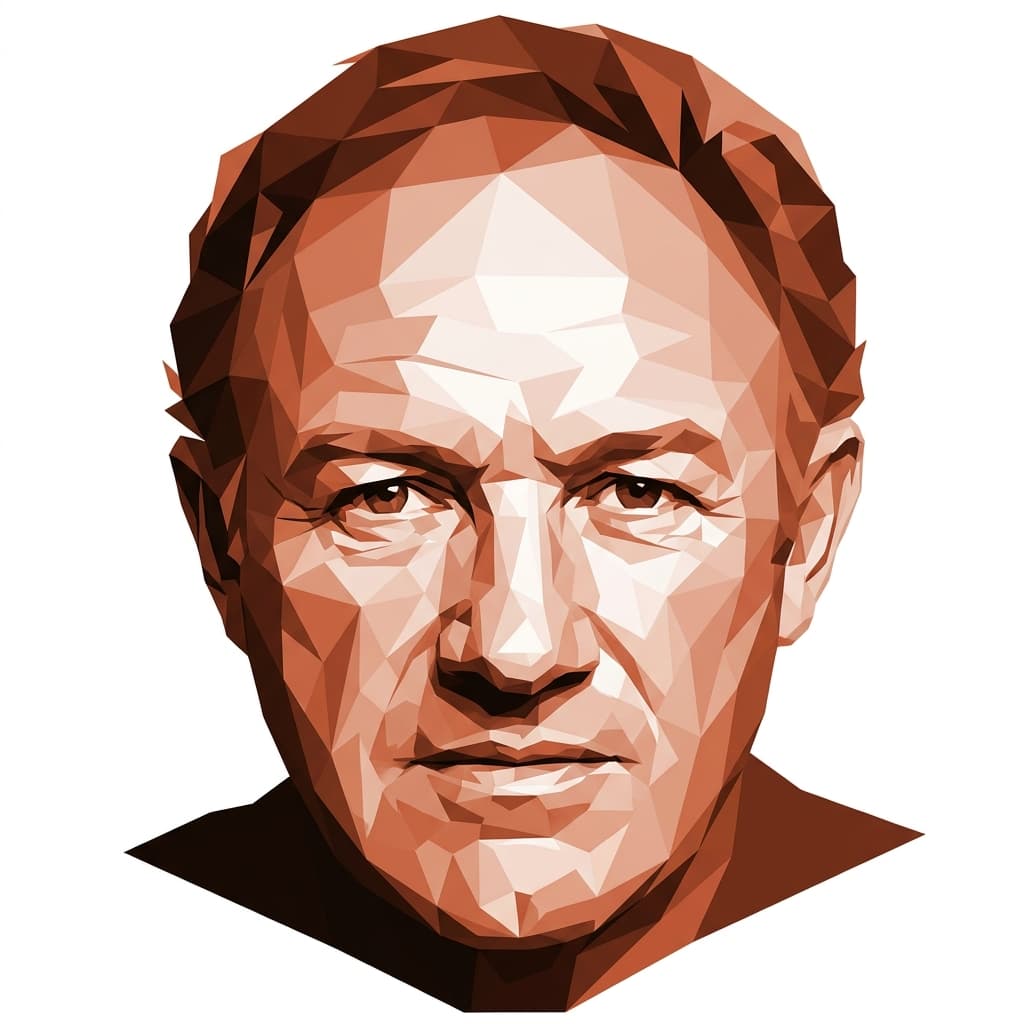
American actor known for tough, intelligent performances in The French Connection, The Conversation, and Unforgiven.
Design
- Q44.5
- h24.5
- R26.5
- g24.5
- i44.5
- S50.3
- T57.5
- U43.2
- V35.4
- W11.6
- X17.5
- Y59.4
- Z53.5
Personality
- Q19.3
- h33.3
- R49.1
- g27.6
- i28.6
- S61.3
- T19.1
- U61.5
- V16.1
- W58.4
- X17.5
- Y59.3
- Z53.4
Gene Hackman was a Generator — built for sustained, mastery-driven work, with the stamina to spend half a century inhabiting other men's lives without ever seeming to coast. He didn't have an easy on-ramp. He lied about his age to join the Marines at sixteen, drifted through radio jobs, and didn't start acting seriously until his thirties. The Pasadena Playhouse famously voted him and his friend Dustin Hoffman "least likely to succeed." He spent years getting it wrong in public before he got it right, which is exactly how a 3/5 profile — trial-and-error experimenter who becomes a fixer others rely on — is designed to work.
His breakthrough as Buck Barrow in Bonnie and Clyde came at 37, late by most standards, and he made up for the wait with a hunger to keep refining the craft that never seemed to switch off. Directors talked about how prepared he was, how he'd run a scene a dozen ways looking for the angle no one else had thought of. Popeye Doyle in The French Connection was the role that proved it: a cop built out of instincts about people and rooms that arrived faster than thought, played by an actor who could make a stakeout feel like a fight.
He had a particular gift for men whose certainties were cracking. Harry Caul in The Conversation — the surveillance expert undone by the pressure of trying to know an unknowable thing — is maybe the purest example. So is Little Bill in Unforgiven, a sheriff with rigid ideas about right and wrong and the violence to enforce them, which won him a second Oscar. Hackman played authority figures who believed in their own logic right up to the moment it betrayed them, and he did it with opinions you could feel him assembling in real time.
Off-camera he was famously private, prone to disappearing from the noise to refill the well. He was also famously prickly — he and Wes Anderson nearly came to grief on The Royal Tenenbaums, and stories about his temper with directors were legion. The flip side of his Generator stamina was a real intolerance for anything that wasn't lighting him up; when a project stopped feeling worth it, he made it everyone's problem. His emotional authority seems to have run hot — decisions that simmered, then erupted, then settled into immovable conclusions.
In 2004 he walked away from acting entirely, after Welcome to Mooseport, and meant it. He moved to Santa Fe, painted, and wrote novels — historical fiction, mostly, well-received but resolutely outside the Hollywood orbit. It was a clean exit of the kind that takes someone who only commits when his gut says yes, and who could tell, with the quiet certainty of a man who's done with the wave, that the wave was done. He lived another twenty years in deliberate retreat with his wife Betsy in New Mexico, where he died in February 2025 at 95 — having spent the energy, on his own terms, and gone to bed.
Sources: biography · birth data
What do you and Gene Hackman have in common?
Enter your birth details to find out