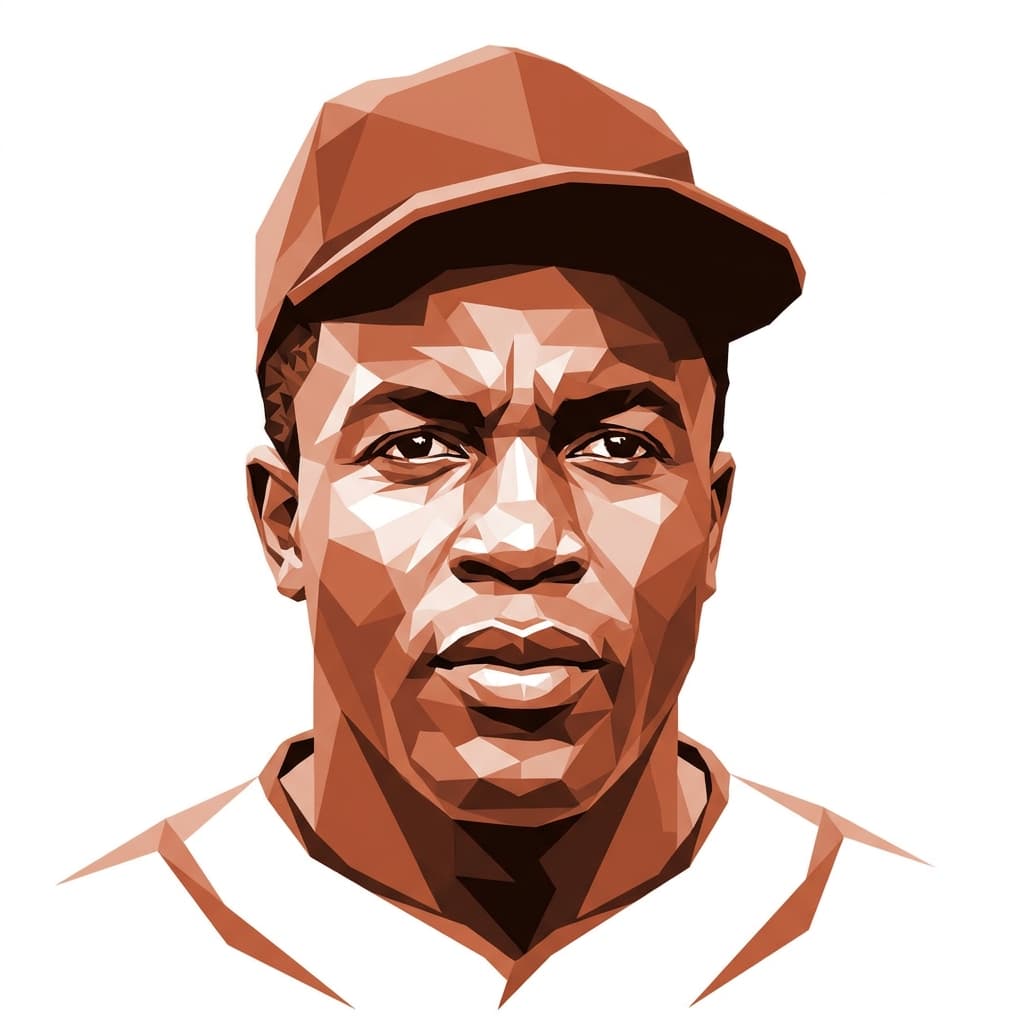
Barrier-breaking baseball player who integrated Major League Baseball in 1947 and became a civil rights icon.
Design
- Q44.6
- h24.6
- R9.5
- g5.2
- i35.2
- S14.2
- T44.2
- U11.4
- V53.1
- W29.3
- X49.6
- Y33.2
- Z52.3
Personality
- Q19.4
- h33.4
- R19.4
- g9.6
- i16.6
- S61.6
- T30.4
- U55.4
- V52.4
- W29.2
- X30.3
- Y33.1
- Z52.2
Jackie Robinson was a Generator — built with the deep, sustainable stamina to do the hardest job in American sports for a decade, then keep going as an activist after his playing days ended. When Branch Rickey met with him in August 1945 and asked if he had the guts to not fight back, Robinson didn't say yes immediately. He listened. He felt the weight of it. Then he committed — and once committed, he didn't waver.
That meeting itself was a textbook moment of responding to what life put in front of him. Robinson hadn't gone looking for Rickey; Rickey's scouts had found him playing shortstop for the Kansas City Monarchs. The opportunity arrived, his gut said yes, and his energy did the rest. His 4/6 profile — the role model whose authority comes from lived experience — fits him almost too neatly. The early years were turbulent (court-martialed in the Army for refusing to move to the back of a bus, kicked around between sports at UCLA), and out of that mess came the man who could walk onto Ebbets Field in 1947 and absorb everything thrown at him without breaking.
The discipline that season required was almost inhuman. Pitchers threw at his head. Runners spiked him on purpose. Teammates initially petitioned not to play with him. Robinson slept on every reaction before letting it out, holding his temper through 1947 and 1948 by agreement with Rickey, then finally releasing it in 1949 when he was free to argue with umpires and bench jockeys like any other player. The man who emerged was sharper, fiercer, and even better — he won the MVP that year.
On the field, his game was a study in recognizing the pattern before anyone else saw it. He stole home 19 times. He took leads off first base that looked suicidal and weren't, because he'd already clocked the pitcher's tells. There was a laser focus on the tiny detail that decided the play, paired with the explosive commitment that didn't flinch once he'd said yes to the run. He treated baseball as a craft to be refined through relentless repetition, and the results — Rookie of the Year, MVP, six All-Star selections, a World Series ring — followed from that obsessive practice.
But the deeper engine was a sense of what was right that would not let him sit down. Robinson understood his role as larger than baseball from the day he signed. He testified before HUAC, wrote a newspaper column, campaigned for politicians, co-founded a Black-owned bank, and stayed in the fight for civil rights long after his knees gave out. He carried a sharp awareness of what his community needed and the energy to actually provide it, even when it cost him friendships across the political spectrum.
In retirement he wrote and spoke constantly, turning the weight of what he'd lived through into something usable for the next generation. He died at 53, gray-haired and nearly blind from diabetes, having spent every bit of the enormous energy he'd been given on work that genuinely mattered to him. He used it all up. That was the point.
Sources: biography · birth data
What do you and Jackie Robinson have in common?
Enter your birth details to find out