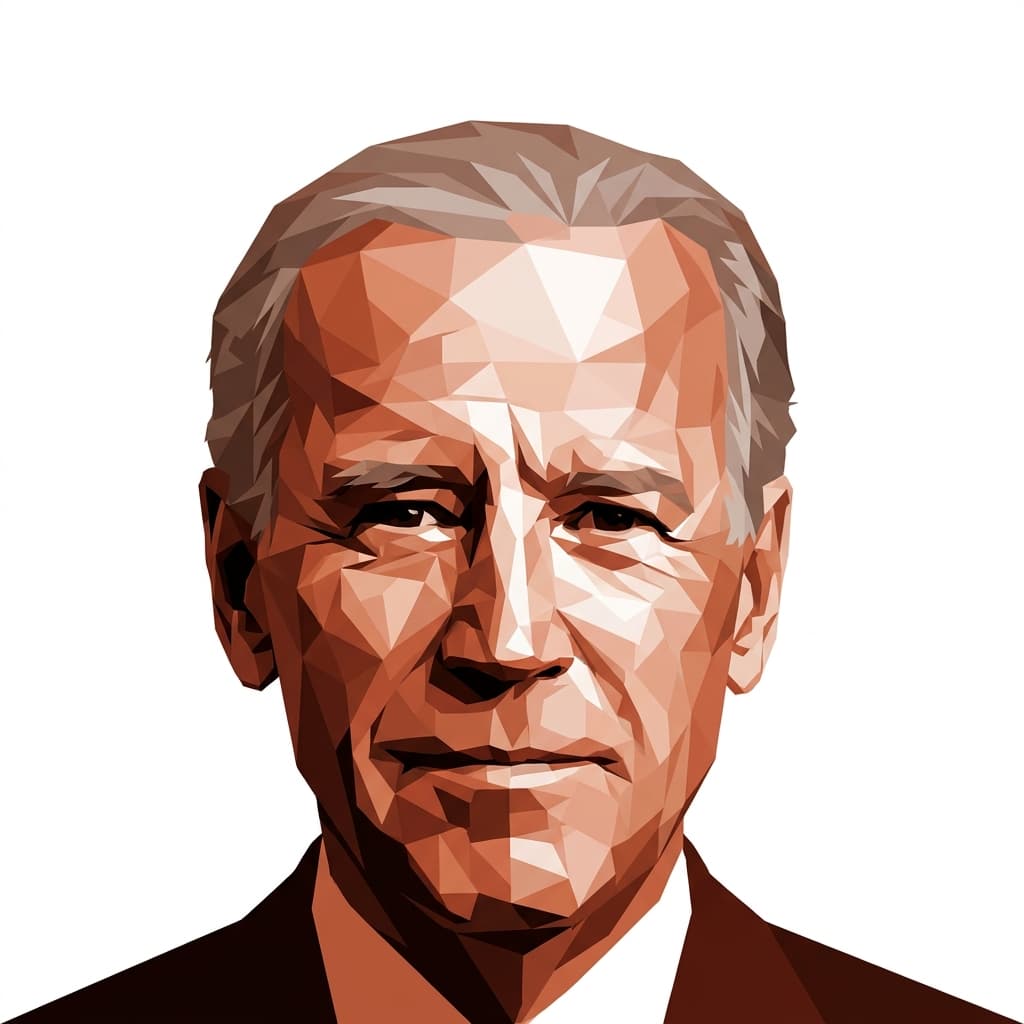
46th President of the United States, six-term Delaware senator, and Obama's two-term Vice President.
Design
- Q29.6
- h30.6
- R61.1
- g59.5
- i55.5
- S47.1
- T31.6
- U64.3
- V53.2
- W35.1
- X20.5
- Y46.1
- Z31.5
Personality
- Q14.4
- h8.4
- R3.5
- g59.1
- i55.1
- S43.3
- T14.5
- U44.6
- V62.5
- W16.5
- X20.3
- Y46.4
- Z31.6
Joe Biden is a Generator — built for the long haul, wired to keep showing up long after others have burned out or moved on. His political life is a fifty-year exercise in stamina: elected to the New Castle County Council at 27, to the U.S. Senate at 29, and still standing at a podium as president in his eighties. The through-line isn't strategy so much as endurance, the steady willingness to keep doing the work whether the moment favored him or not.
He ran for president in 1988 and dropped out in scandal. He ran again in 2008 and barely registered in Iowa. When he finally won in 2020, it was on his third attempt, at age 77, after a lifetime of being told his moment had passed. That arc is the 4/6 profile almost literally — a first-half life of experimentation, stumbles, and public embarrassments, followed by a later chapter as the elder statesman others turned to precisely because he'd survived so much of it already. His authority in the party came less from brilliance than from having been there, having lost, and having kept going.
The losses shaped him. His first wife and infant daughter were killed in a car crash weeks after his 1972 Senate election; his son Beau died of brain cancer in 2015. Biden built a public identity around grief in a way few American politicians ever have, and it gave him an unusual capacity to sit with other people's worst days. Voters who met him at rope lines routinely described the same thing: he asked about their dead. He wrote down phone numbers. He called back. The empathy was not performed — it was the kind of bond formed by shared loss, and it became his most durable political asset.
He was also, famously, a talker who couldn't stop talking. The gaffes, the meandering Senate floor speeches, the tendency to say the true thing before the room was ready to hear it — endorsing same-sex marriage on Meet the Press in 2012 before Obama had — all of it lived in the same nervous system. As a senator he chaired Judiciary and Foreign Relations for years, and his appetite for the granular procedural detail of legislation is what let him whip votes on the 1994 crime bill, the Violence Against Women Act, and eventually the infrastructure and CHIPS packages of his presidency. He liked the machinery. He liked knowing the names.
His instincts about the country's direction were his other weapon. Biden built his 2020 campaign around a vision of restoration and where America needed to be next, and governed with the conviction that the moment demanded big, ordering legislation — Rescue Plan, Inflation Reduction Act, infrastructure. Whether history judges it a genuine reordering or a holding action is not yet settled. What is settled is the commitment, once given, that he refused to walk back: he entered the 2024 race, insisted for months he was staying in after a disastrous debate, and only stepped aside when the party essentially made continuing impossible. Even then, the exit was reluctant. He had always been someone who finished what he started, on his own timing, and this was the first time in a very long career that the timing was taken from him.
Sources: biography · birth data
What do you and Joe Biden have in common?
Enter your birth details to find out