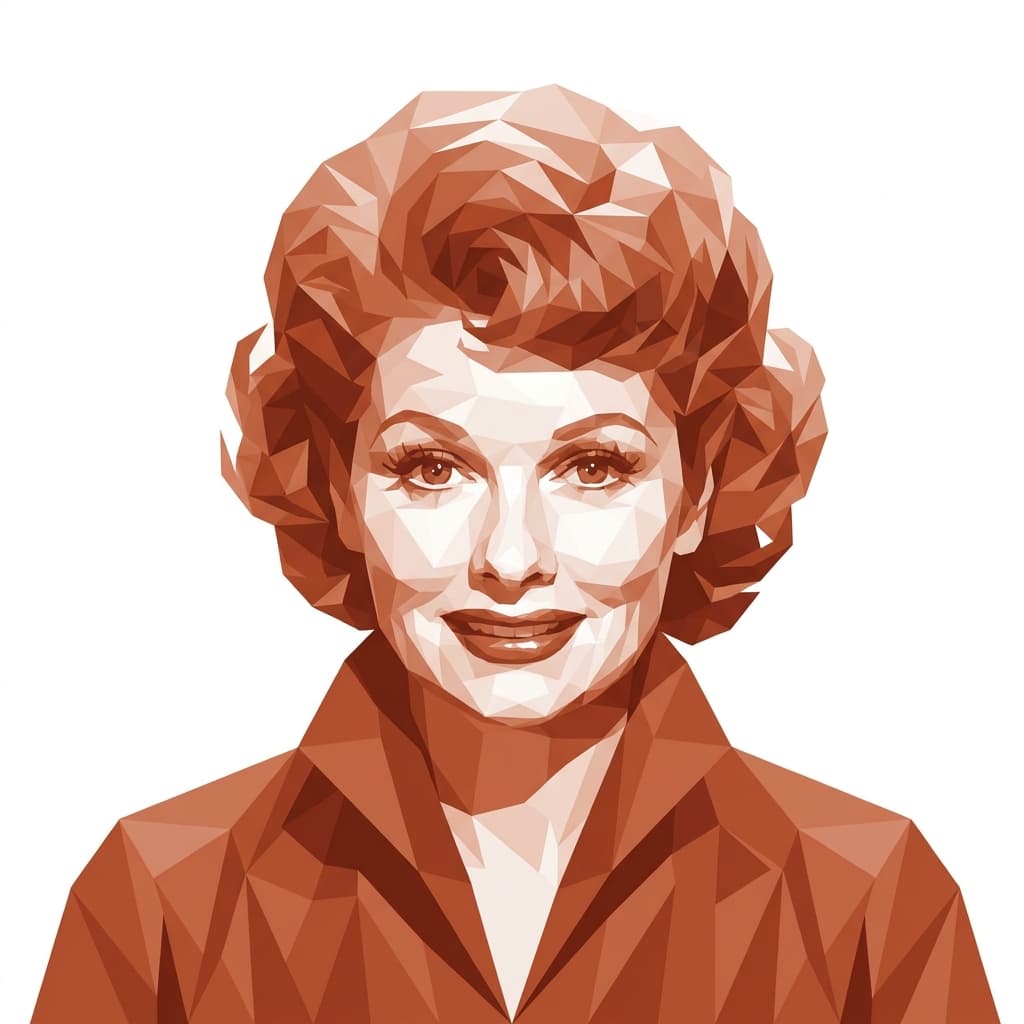
Pioneering comedian and producer who turned physical comedy into an art form and reinvented television.
Design
- Q2.3
- h1.3
- R59.4
- g24.3
- i44.3
- S2.1
- T12.1
- U37.5
- V44.2
- W24.4
- X60.4
- Y53.5
- Z12.5
Personality
- Q7.1
- h13.1
- R58.4
- g27.4
- i28.4
- S40.5
- T6.2
- U2.1
- V28.5
- W23.1
- X60.1
- Y62.2
- Z15.1
Lucille Ball was a Generator — built for stamina, repetition, and the kind of bodily mastery that only shows up after thousands of hours of doing the same bit until it sings. She spent fifteen years as a B-movie contract player in Hollywood, getting nicknamed "Queen of the Bs," before I Love Lucy premiered in 1951. That long apprenticeship wasn't wasted time; it was a Generator's slow accumulation of craft, the grape-stomping and chocolate-conveyor-belt and Vitameatavegamin routines built on top of two decades of learning what landed and what didn't.
Her 1/3 profile shows up everywhere in the work — the investigator who studied every comedian she could (Buster Keaton personally coached her on prop work), paired with the experimenter who was willing to look ridiculous on camera, fall down, get dunked, get covered in dough. She trusted the wisdom that only comes from getting it wrong on the way to getting it right, and she was famously demanding in rehearsal because she needed to feel a bit in her body before she'd commit. When something didn't work, she threw it out. When it worked, she'd run it again and again until the timing was surgical.
The decision that defined her life was an emotional one she sat with for a long time: insisting that Desi Arnaz play her television husband when CBS wanted someone "more American." She wouldn't budge. The network finally relented, and to make the show work with Desi based in Los Angeles, the Arnazes formed Desilu Productions, shot on 35mm film before a live audience, and accidentally invented the modern sitcom. She waited for the right pieces to show up and then said yes with her whole body — the show, the format, the studio.
After her divorce from Desi in 1960, she bought out his share of Desilu and became the first woman to run a major television studio. She green-lit Star Trek when every other executive had passed, trusting an instinct about a project's potential that the room couldn't see yet. She did the same for Mission: Impossible and The Untouchables. She was famously reluctant about the executive role — she'd rather have been on a soundstage — but people kept handing her the wheel and she kept steering well.
On screen, Lucy Ricardo was a study in comic timing that knew exactly when to hold the beat and exactly when to break it. Off screen, Ball was reportedly tough, blunt, occasionally salty, protective of the small circle she actually let in, and fiercely loyal to her crew. She remarried Gary Morton in 1961 and largely stayed married to the work, returning to series television in The Lucy Show and Here's Lucy because the doing itself was what lit her up.
She kept reinventing the same character for nearly thirty years without ever quite repeating herself — finding fresh angles inside a familiar form, taking what was complicated about being a woman in mid-century America and making it look like slapstick. When she died in 1989, the industry she had quietly built around herself was the template everyone else was still using.
Sources: biography · birth data
What do you and Lucille Ball have in common?
Enter your birth details to find out