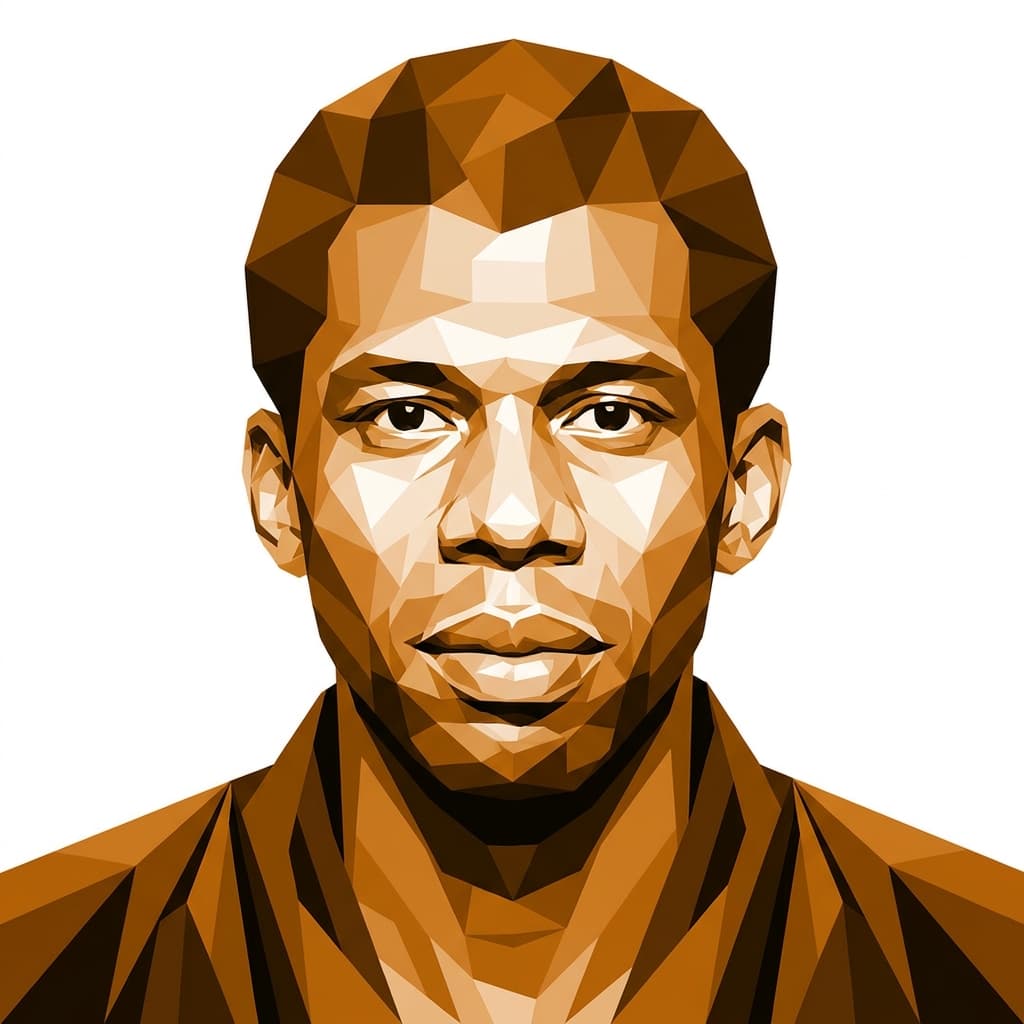
NBA legend whose six championships and relentless competitive drive redefined basketball greatness.
Design
- Q34.1
- h20.1
- R48.6
- g56.6
- i60.6
- S14.5
- T1.2
- U7.6
- V55.4
- W41.5
- X59.6
- Y1.1
- Z64.1
Personality
- Q30.5
- h29.5
- R9.5
- g56.4
- i60.4
- S41.1
- T38.4
- U33.3
- V22.3
- W13.3
- X59.4
- Y1.3
- Z40.6
Michael Jordan is a Manifesting Generator — built for sustained intensity and explosive efficiency, capable of going go-go-go for forty-eight minutes a night and then doing it again the next evening in a different city. Cut from his high school varsity team as a sophomore, he didn't initiate a vendetta so much as respond to a slight that lit up his gut and never stopped responding to slights for the next thirty years. Every perceived disrespect — real, imagined, or invented — became fuel.
He had a 5/1 profile, the investigator who steps out as practical problem-solver, and you could see it in his preparation: hours of film, obsessive scouting of opponents' tendencies, a foundation so deep that by the time he stepped on the floor he was solving problems before they happened. His teammates talked about his appetite for the tiniest mechanical details — the angle of a defender's hip, the half-beat hesitation in a closeout, the spot on the floor where Karl Malone liked to catch. He drilled the same fadeaway from the same elbow thousands of times until the body knew it without the mind.
The famous moments — the Flu Game, the shrug against Portland, The Shot over Ehlo, the final jumper over Russell in '98 — were exercises in being entirely inside the moment, responding to what the defense gave him with no daylight between perception and action. His raw motor was something teammates marveled at; he'd practice harder than he played, then play harder than anyone else on Earth. He also chose his fights, and chose a lot of them, turning All-Star Games into personal grudge matches and pickup runs into wars.
Off the floor, emotional weather drove him as much as anything tactical. He sat with slights for days, weeks, years — Bryon Russell's casual handshake at a 1993 chance encounter became the pretext for a Hall of Fame induction speech five years after retirement. The 1993 retirement after his father's murder was a real grief processed in real time; the baseball detour was the kind of pivot a non-linear path requires, a need to chase a new experience even at the cost of looking foolish in a Birmingham Barons uniform. He came back when the gut said come back: "I'm back," two words faxed to the world.
As a leader he was not gentle. He demanded a level of commitment from teammates that broke some and made others, punching Steve Kerr in practice, riding Scott Burrell mercilessly, daring Bill Cartwright to be tougher. But the championship teams he built were organized around a shared vision he kept articulating through sheer will, and when the recognition came — six rings, six Finals MVPs — nobody disputed who the engine was. His sneaker line turned a love of the work into a generational fortune, the rare athlete who built an empire bigger than his playing career.
In retirement he became harder to read — a part-owner who chain-smoked cigars, told stories about old battles with a gambler's relish, and largely retreated from public life on his own terms. The Last Dance documentary, two decades later, was the invitation he finally accepted to let the wisdom out. He still, visibly, remembered every slight.
Sources: biography · birth data
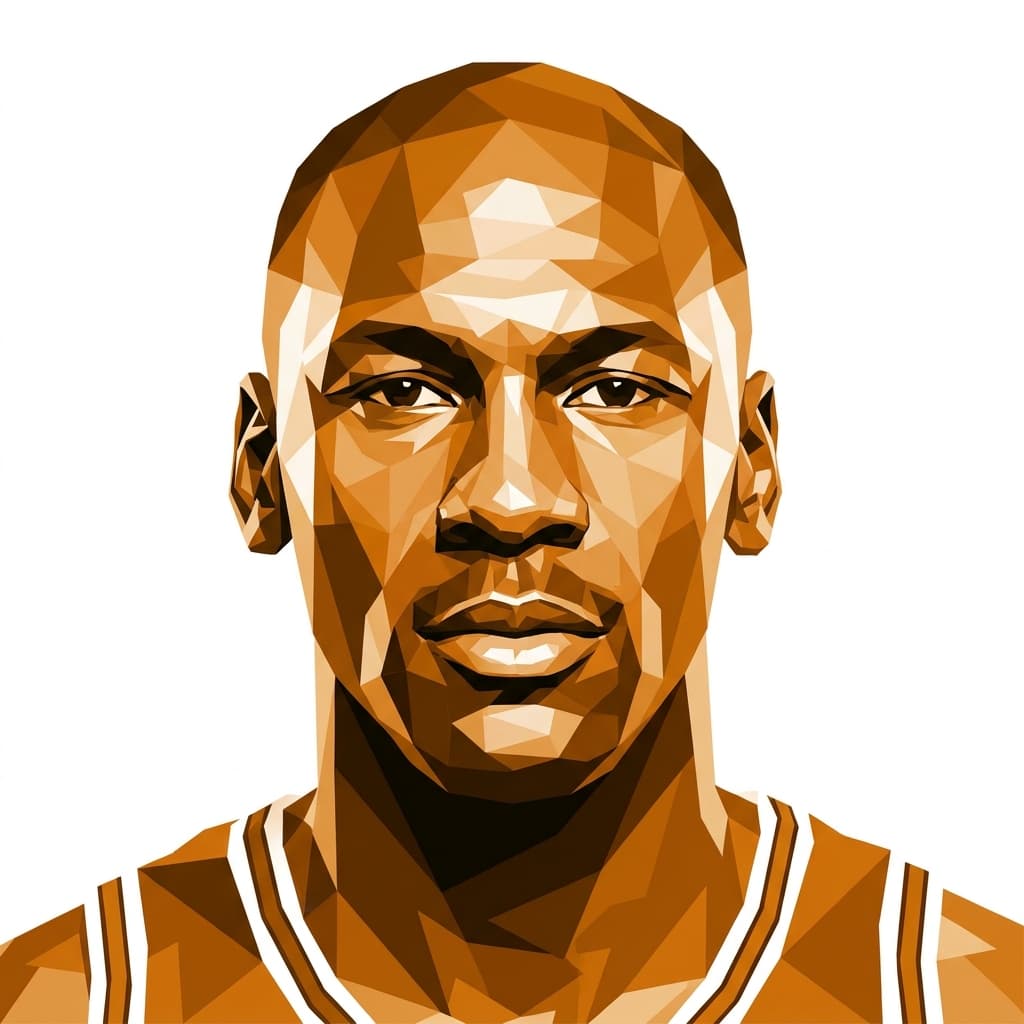
What do you and Michael Jordan have in common?
Enter your birth details to find out