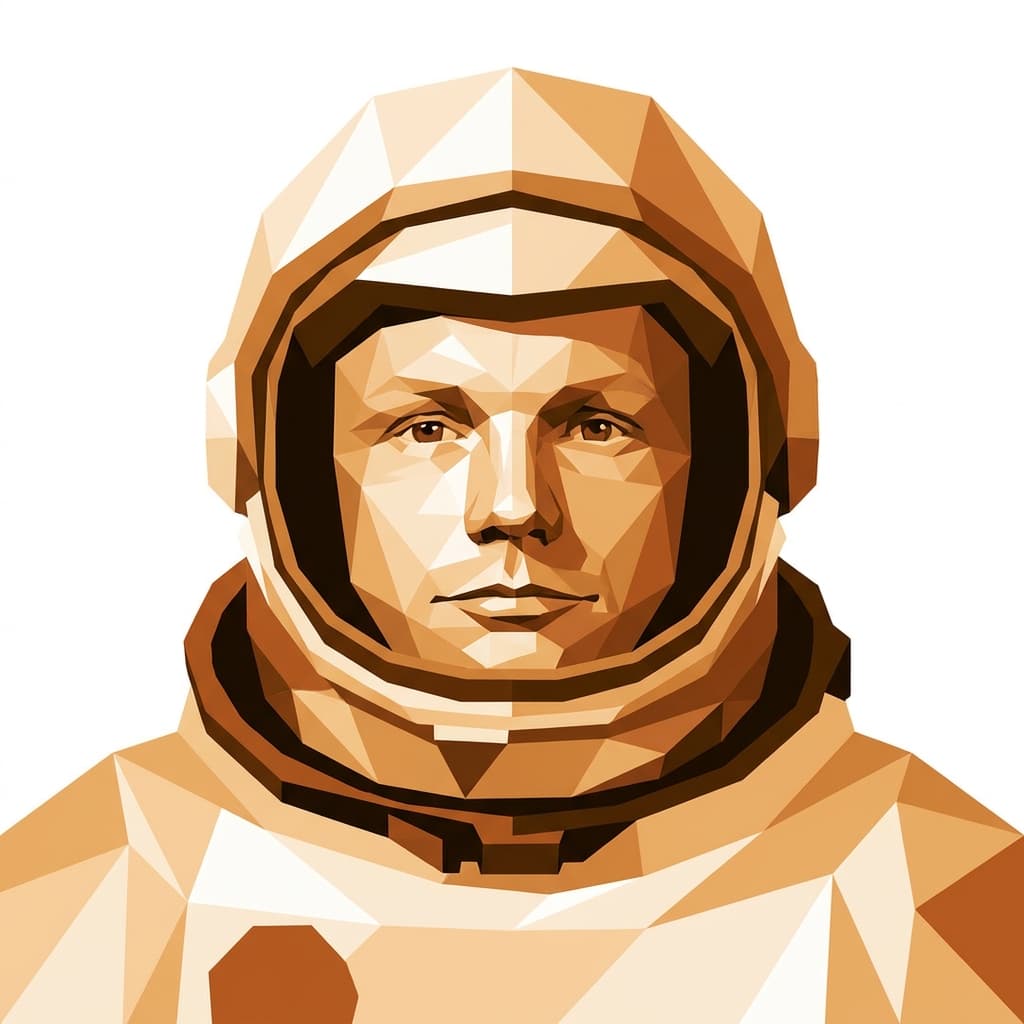
American astronaut and aeronautical engineer who became the first person to walk on the Moon.
Design
- Q2.1
- h1.1
- R33.1
- g27.1
- i28.1
- S20.3
- T16.1
- U17.5
- V45.2
- W38.3
- X21.4
- Y59.1
- Z53.3
Personality
- Q33.5
- h19.5
- R11.3
- g3.1
- i50.1
- S59.2
- T6.3
- U35.4
- V52.6
- W58.3
- X51.1
- Y59.3
- Z53.5
Neil Armstrong was a Manifesting Generator — wired for speed, mastery, and the kind of multi-track curiosity that took him from building model airplanes in an Ohio bedroom to standing on the surface of the Moon. He earned his pilot's license at sixteen, before his driver's license, and from then on the trajectory was less a plan than a series of gut-level yeses to whatever was actually in front of him: Navy aviator at twenty, combat missions over Korea, then test pilot at Edwards flying the X-15 to the edge of space.
As a 5/1 profile — the practical problem-solver who needs a foundation before he leads — Armstrong was almost ostentatiously prepared. He logged 2,400 flying hours in more than 200 aircraft types before NASA selected him, and his colleagues consistently described him as the engineer's astronaut, the one who'd actually read the manuals. That foundation showed in 1966 when Gemini 8's thrusters jammed and the capsule began tumbling at one revolution per second. Armstrong diagnosed the failure and executed the recovery in minutes, the kind of cool problem-solving that emerges only after the foundation is real.
His emotional authority read in the famously long pauses, the unhurried diction, the refusal to be rushed into a quote or a feeling. Reporters mistook it for blandness; it was something closer to waiting for the wave to settle before speaking. The same quality is what kept him alive on July 20, 1969, when the Eagle's computer threw alarms and the planned landing site turned out to be a boulder field. With about 30 seconds of fuel remaining, he flew manually past the rocks and set down on the Sea of Tranquility — stillness held under absolute pressure.
"That's one small step for [a] man, one giant leap for mankind" was, characteristically, a sentence pared down to exactly what needed saying. He'd thought about it but not over-rehearsed it. Back on Earth, he declined nearly every commercial endorsement offered to him, taught engineering at the University of Cincinnati, and lived on a dairy farm in Ohio. The hunger for the next frontier that had pulled him through flight school and the astronaut corps did not, it turned out, require him to keep performing the moonwalk for the rest of his life.
He had the pioneer's willingness to be the first one through the door, but very little appetite for the celebrity that came after. He turned down dinner invitations from presidents, refused to autograph items he suspected would be sold, and once sued his barber for selling clippings of his hair. The reflexive retreat into private life baffled people who expected a hero to behave like one. Armstrong seemed to feel that his job had been to fly the mission and come home, and that taking responsibility for only what was actually his to carry was the dignified way to honor it.
He died in 2012 after complications from heart surgery, having spent most of his post-Apollo life quietly mentoring engineers, serving on the Rogers Commission after Challenger, and refusing to mythologize himself. The steady, unshowy commitment to mastering the craft is, in the end, what the people who flew with him remembered first.
Sources: biography · birth data
What do you and Neil Armstrong have in common?
Enter your birth details to find out