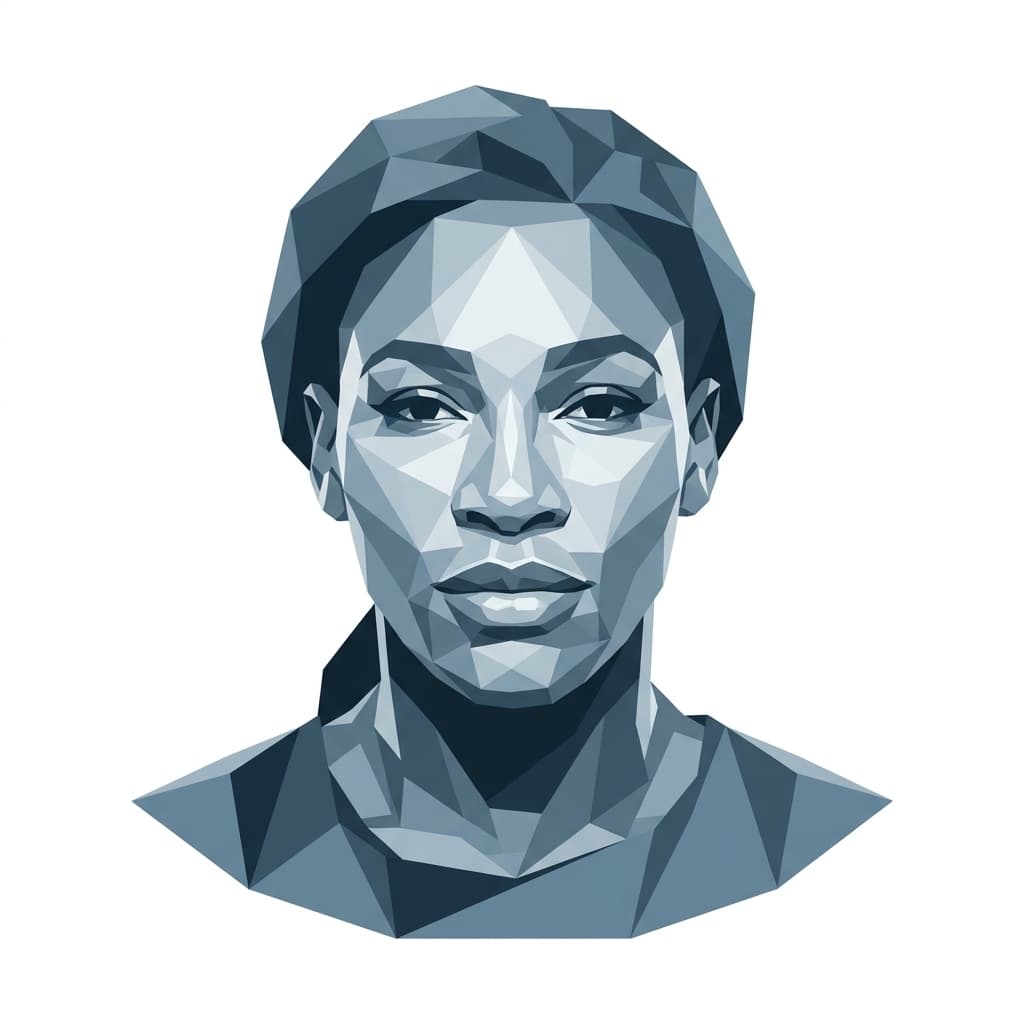
23-time Grand Slam champion who redefined tennis, power, and what longevity looks like in women's sport.
Design
- Q52.3
- h58.3
- R24.1
- g56.6
- i60.6
- S12.6
- T56.1
- U35.5
- V46.4
- W46.6
- X14.3
- Y11.1
- Z32.1
Personality
- Q46.6
- h25.6
- R47.4
- g56.4
- i60.4
- S50.4
- T1.4
- U7.3
- V57.3
- W48.3
- X14.3
- Y26.6
- Z32.3
Serena Williams is a Projector — not the type most people associate with elite athletics, which is exactly what makes her career so interesting. Projectors aren't built for relentless, undifferentiated output; they're built to see the game, master a system, and dominate through recognition and precision. Serena's tennis was always less about volume than penetration: the serve, the return, the moment of decision. She didn't grind out points the way many of her peers did. She ended them.
The Compton story has become mythology, but the structure of it matters. Richard Williams designed a system — court drills, public schools instead of the junior tennis circuit, an unusual amount of time off — and Serena and Venus operated inside it. That kind of bounded apprenticeship suits someone with a drive to innovate inside tight constraints and a gift for sustained, narrowed focus. She didn't play hundreds of junior tournaments. She showed up at the pro level and started winning, the way someone with a 6/3 profile does — trial, error, and eventually the role-model phase where the whole sport orbits around her.
Her decision-making had a particular texture. Serena famously talks things through — with Venus, with her mother, with coaches, with her sister Isha. That's Mental Authority doing its work: clarity arriving through conversation in the right room with the right people, not from a quiet gut hit. You can see it in her press conferences, where she sometimes seems to be figuring out what she thinks as she says it, and in her long pattern of the kind of certainty that arrives only after she's said it out loud.
On court she carried the energy of someone who could persuade a match into her favor — staring down line judges, willing aces on second serves, turning a 5-2 deficit into a routine win. Off court the same gift built an empire: Serena Ventures, the fashion lines, the early Reddit and Coinbase bets, the willingness to be paid like the most marketable athlete in the world. She has a natural sense for what's worth her energy and what isn't, and she's used it on businesses, friendships, and which tournaments to skip.
Her voice mattered too. The 2018 US Open final, the Indian Wells boycott and eventual return, the maternal-health advocacy after her daughter Olympia was born — Serena tended to speak when the moment had built up enough pressure to make silence the wrong choice. She wasn't a constant pundit. She was a reluctant leader people kept looking to anyway, and when she finally said something, it landed as story rather than statement.
The "evolution away from tennis" essay in Vogue was vintage 6/3 — the role-model phase named out loud, the past reframed as wisdom rather than résumé. She left the sport in love with her own body and what it had carried her through, an unusual ending for an athlete and a fitting one for a Projector who'd finally decided, on her own terms, that the invitation had been answered enough times.
Sources: biography · birth data
What do you and Serena Williams have in common?
Enter your birth details to find out