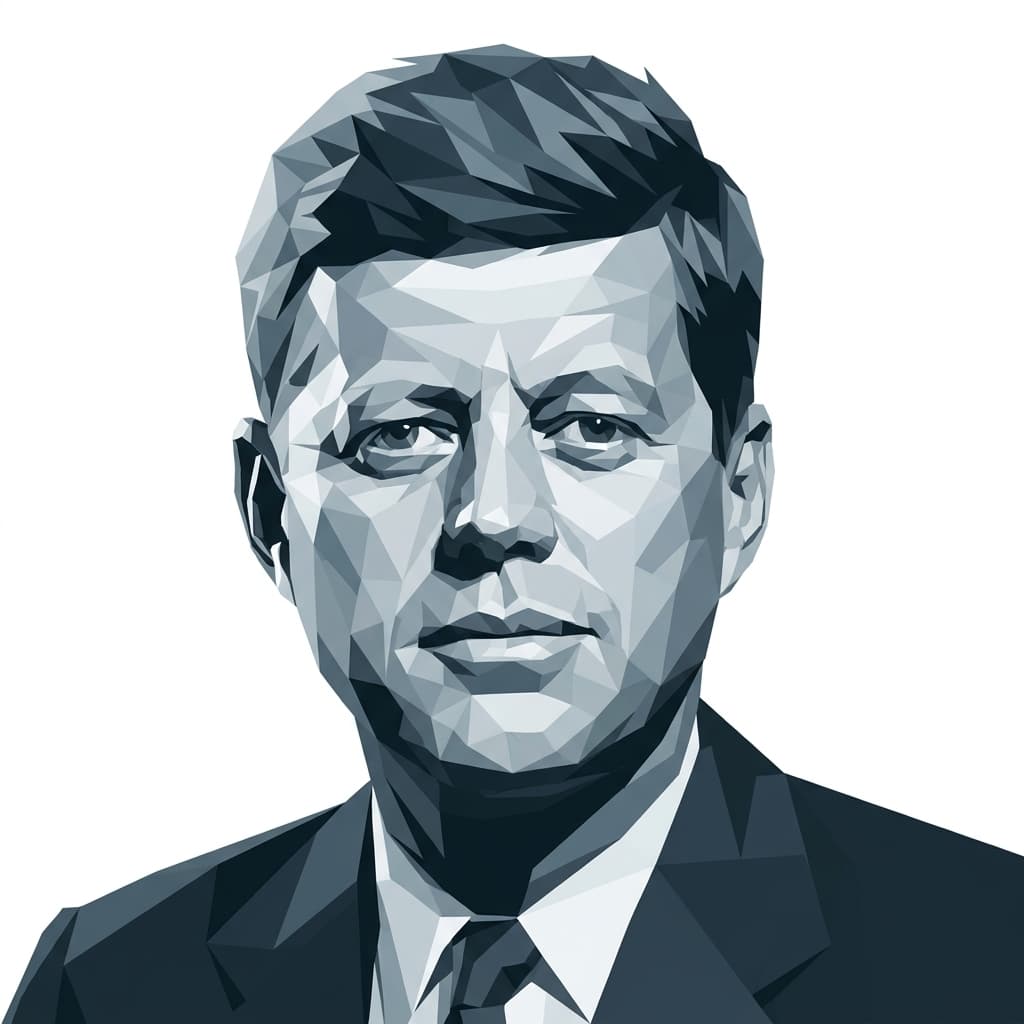
American filmmaker behind Jaws, E.T., Schindler's List, and Jurassic Park; co-founder of DreamWorks.
Design
- Q46.1
- h25.1
- R7.5
- g35.5
- i5.5
- S18.1
- T1.1
- U50.2
- V50.4
- W31.5
- X45.6
- Y18.5
- Z33.6
Personality
- Q11.5
- h12.5
- R28.6
- g35.1
- i5.1
- S9.3
- T43.1
- U10.4
- V1.6
- W33.1
- X45.3
- Y48.2
- Z33.6
Steven Spielberg is a Projector — not the bottomless-energy workhorse Hollywood mythology might suggest, but someone whose actual gift is seeing how a scene, a story, or a person could work, and then guiding everyone toward that vision. The Universal Studios origin myth, where a teenage Spielberg supposedly snuck onto the lot and set up an unused office, is essentially a story about making himself visible so the right people would invite him in. The invitation came: a short film called Amblin' got him a TV directing contract at 21, the youngest in Universal's history.
He built his foundation the way a 5/1 profile tends to — investigating obsessively, then stepping out as the practical problem-solver. Before Jaws, he'd directed television, including the road-rage thriller Duel, and he'd studied genre mechanics with the patience of someone who needed to know exactly how suspense was built before he tried to rebuild it. When the shark animatronic kept breaking down on Martha's Vineyard, he didn't panic; he solved the problem by seeing what others missed in the details, withholding the creature and letting John Williams' two notes do the work. The constraint became the film.
Spielberg has always been a famously collaborative director, and that fits the way he talks decisions out — running shot ideas past trusted producers, editors, and writers until the right answer becomes audible in his own voice. Kathleen Kennedy, Frank Marshall, Janusz Kamiński, Williams — these are people he keeps close because they listen well, and listening is what gives him access to his own clarity. The decades-long Williams partnership isn't sentimental; it's structural. He needs the sounding board.
His instinct for the exact moment to land an emotional beat is what separates him from technicians with similar tool kits. The bicycle silhouette against the moon in E.T., the colorized red coat in Schindler's List, the dinosaurs revealed not by spectacle but by a rippling water glass — these are timing decisions, not effects decisions. Underneath them sits an almost child-like openness to wonder that survived a difficult childhood and his parents' divorce, and that he's spent fifty years protecting as the engine of his work.
The harder pivot came in 1993, when he shot Jurassic Park and Schindler's List in the same year. The Holocaust film was the investigation he'd been postponing his whole career, the breakthrough he couldn't quite explain to studios who wanted more popcorn. He used his own money, refused a salary, and channeled the proceeds into the USC Shoah Foundation — a stewardship of resources for something larger than himself that recast what kind of director he could be. Saving Private Ryan, Munich, and Lincoln followed from that same vein.
Co-founding DreamWorks in 1994 with Jeffrey Katzenberg and David Geffen was a reluctant-leader move, the kind a Projector makes when the right collaborators show up and the invitation feels real. He's spent the years since alternating between blockbuster craft and the quieter, more autobiographical work that The Fabelmans finally made literal — a director in his seventies turning the camera on the family that made him a director in the first place.
Sources: biography · birth data

What do you and Steven Spielberg have in common?
Enter your birth details to find out