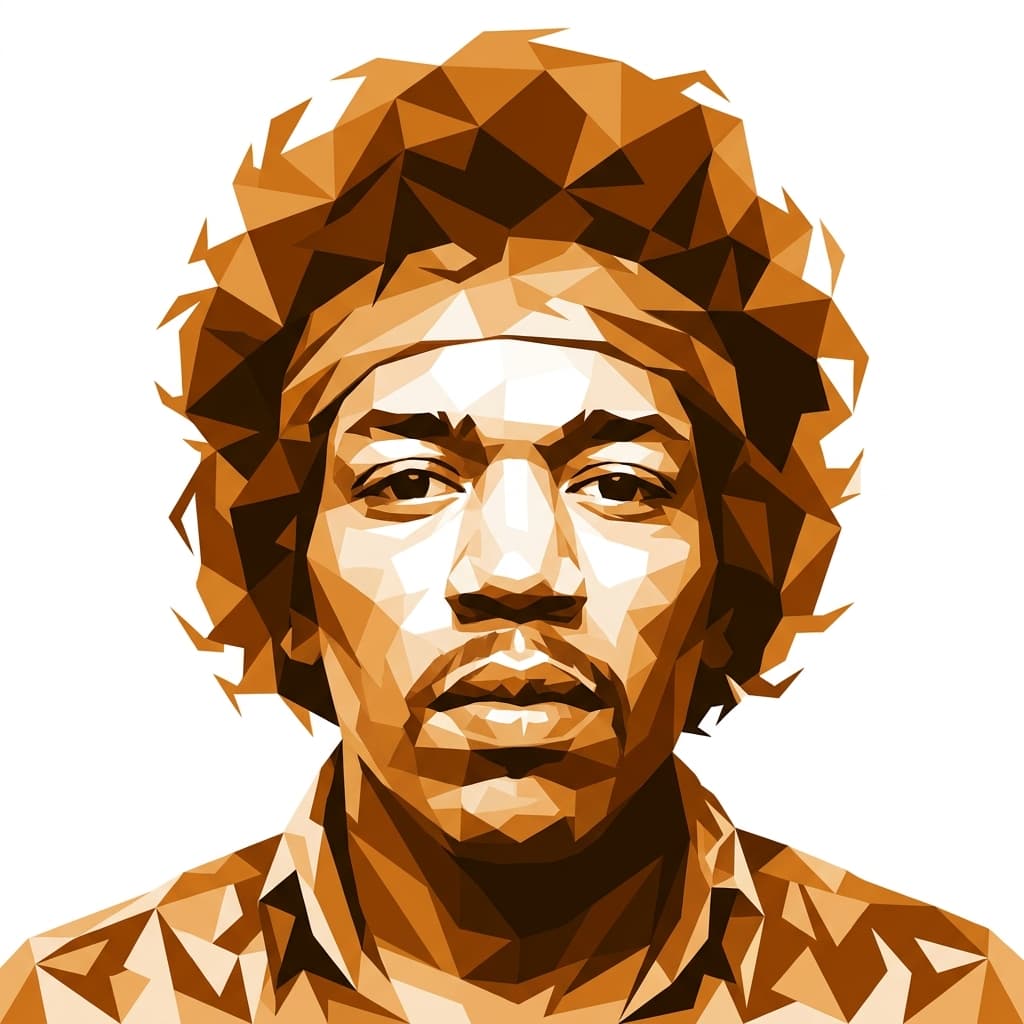
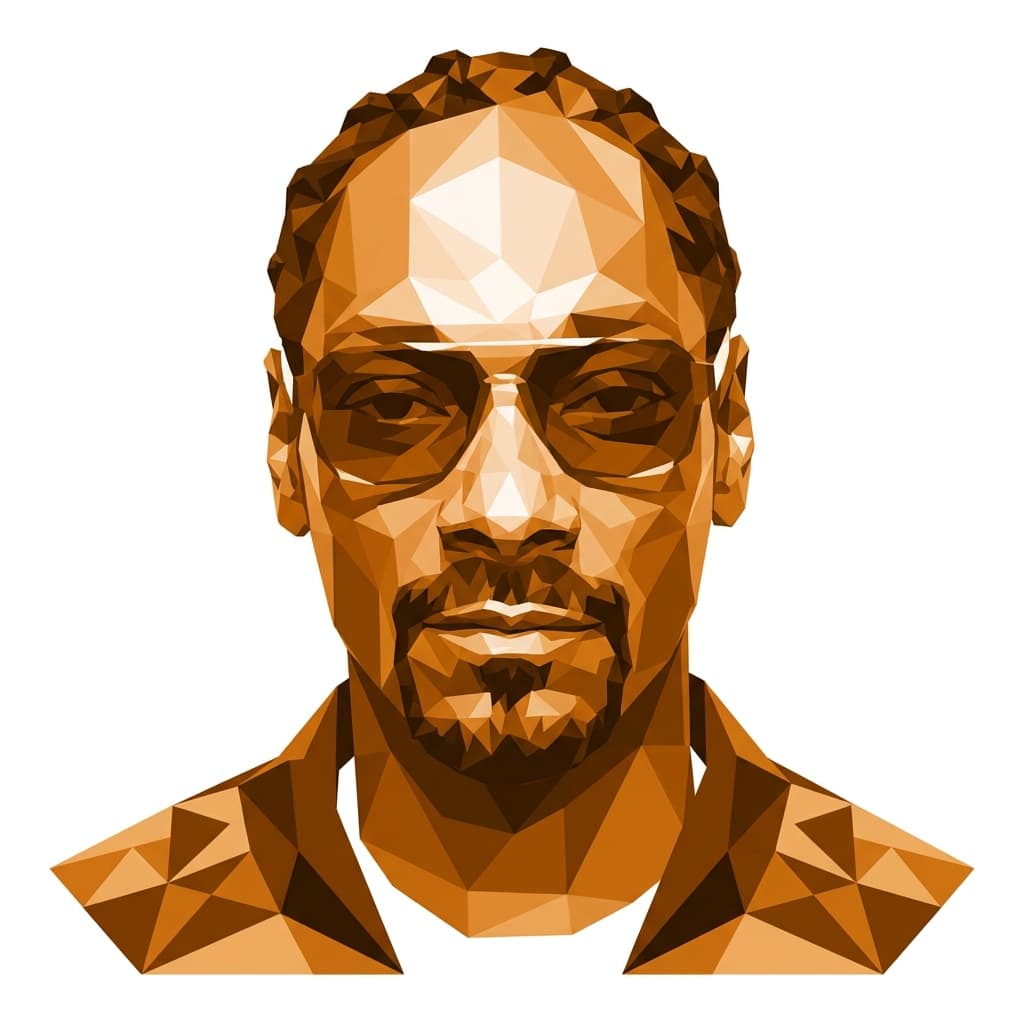
West Coast rap icon turned cultural mogul whose laid-back drawl reshaped hip-hop and American celebrity.
Design
- Q56.3
- h60.3
- R56.4
- g13.2
- i7.2
- S29.1
- T53.5
- U49.3
- V14.3
- W20.4
- X48.1
- Y34.1
- Z6.6
Personality
- Q50.1
- h3.1
- R1.3
- g19.4
- i33.4
- S28.4
- T44.4
- U49.4
- V9.1
- W20.6
- X48.6
- Y34.2
- Z46.3
Snoop Dogg is a Manifesting Generator — wired to run several careers at once and never really pick one — which is why the same man who cut Doggystyle in 1993 has since coached youth football, hosted a cooking show with Martha Stewart, launched a cannabis empire, called the Olympics for NBC, and still tours. The through-line isn't a plan. It's a gut that keeps saying yes to the next thing that lights him up.
His breakthrough came by waiting for the right thing to show up: a tape passed to Dr. Dre through his stepbrother Warren G, an invited audition, and the drawl on "Deep Cover" that made every A&R in Los Angeles sit up. Snoop didn't chase Dre — Dre found him. That responsive posture, plus the 1/3 investigator-experimenter at the heart of his chart, explains a career built by trying things: G-funk, reggae as Snoop Lion, gospel as Bible of Love, country cameos, jazz standards. Some worked, some didn't. He kept going.
The 1993 murder trial — he was acquitted in 1996 after nearly three years of proceedings — is a case study in Emotional Authority tested under maximum pressure. Friends and lawyers watched him refuse to make reactive decisions in the heat of it. He rode the wave, waited for clarity, and by the time Tha Doggfather dropped, he'd already begun the long pivot away from the gangsta-rap intensity that defined Doggystyle. Watching him talk about that period years later, you can see him sensing which fights are worth having and which aren't.
His voice is the whole product. That unhurried, conversational flow — saying exactly what needs saying in the moment, often delivering lines so casually true they become the hook — is what made him translate from Long Beach to living rooms in Tokyo and Nairobi. He carries a natural storyteller's instinct for turning lived experience into something you want to hear twice, whether it's a verse, a Martha Stewart aside, or an Olympics recap. His creative output arrives in waves rather than on schedule — years of albums, then a gospel record nobody predicted, then a children's book.
Behind the persona is a sharp read on people. His Snoop Youth Football League, founded in 2005, reflects a real instinct for showing up around what a community actually needs, and his mentorship of younger artists — from Wiz Khalifa to a generation of West Coast rappers — comes from powerful instincts about who's got something and who doesn't. He'll commit hard once the yes lands: decades with the same wife, decades with Death Row's ghosts (which he eventually bought outright in 2022), decades of showing up for his kids and neighborhood.
What's underrated is how much of his cultural staying power comes from working newness inside tight constraints — a rapper who became a brand, a brand that became a grandpa figure, a grandpa figure who still surprises people. He treats his career like an experiment he's allowed to revise. That's the Manifesting Generator gift, and Snoop has lived it louder and longer than almost anyone.
Sources: biography · birth data
What do you and Snoop Dogg have in common?
Enter your birth details to find out