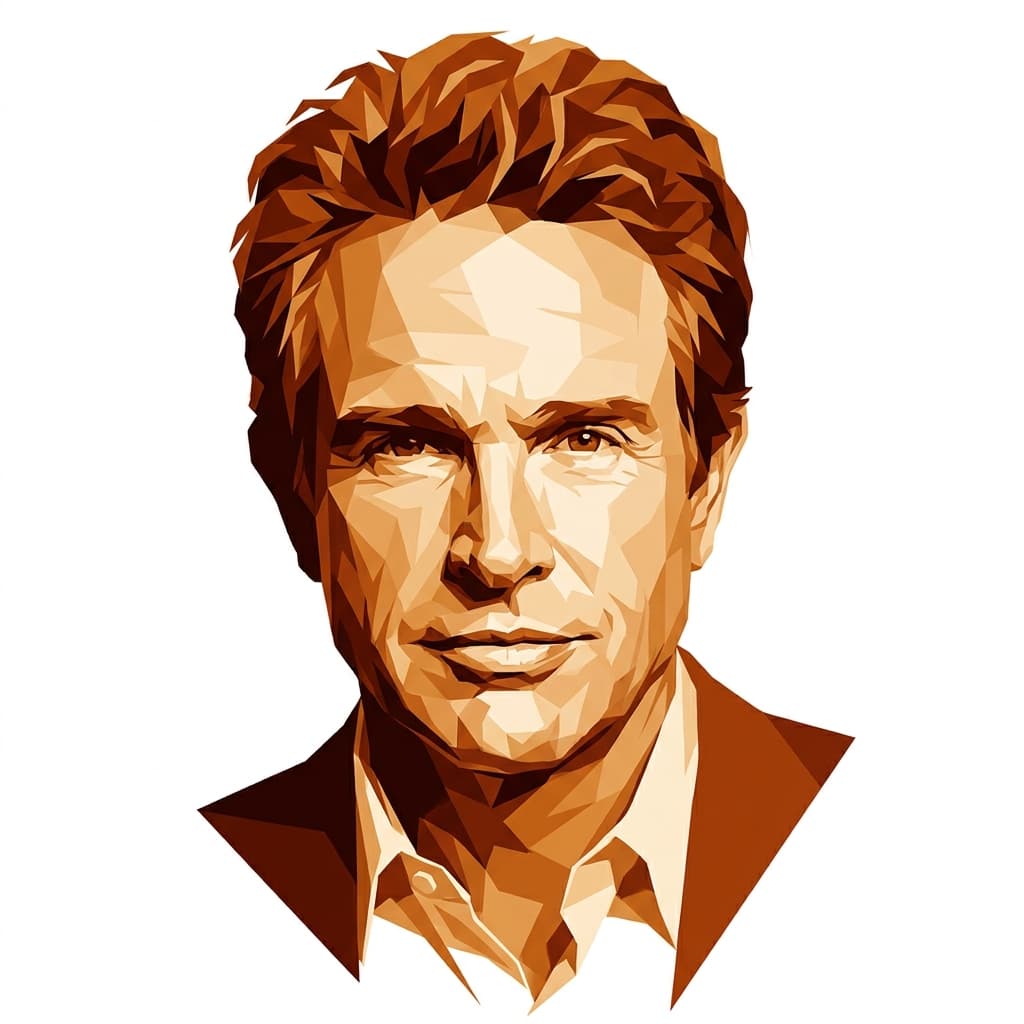
English musician, frontman of The Police, and solo artist blending rock, jazz, and world music.
Design
- Q39.1
- h38.1
- R45.6
- g63.1
- i64.1
- S53.4
- T29.1
- U15.1
- V21.4
- W6.5
- X39.1
- Y57.2
- Z7.6
Personality
- Q18.5
- h17.5
- R57.5
- g37.5
- i40.5
- S46.1
- T59.4
- U29.4
- V17.6
- W18.3
- X39.5
- Y57.4
- Z4.3
Gordon Sumner — known to the world as Sting — is a Manifesting Generator, wired to chase several passions at once without settling into a single lane, and the shape of his career maps that wiring almost perfectly. He has been, in roughly this order and often simultaneously: a Newcastle schoolteacher, a jazz bassist in working-men's clubs, the bleached-blond frontman of a globally dominant trio, a Grammy-hoarding solo artist, a lutenist performing John Dowland songs from the 16th century, a Broadway composer, a rainforest activist, and a Tuscan winemaker. The through-line isn't a genre; it's the gut pull toward whatever currently lights him up.
The Police were always slightly too small to hold him. He wrote most of the songs, sang lead, played a melodic bass that behaved like a third guitar, and by 1984 — at the peak of Synchronicity — he walked away. That decision had the slow, settled quality of someone who'd already felt it through; he reportedly knew for over a year before announcing it. It was also classic wait, then respond, then move fast — he didn't quit on impulse, but once the internal yes landed, the band was effectively over. He spent the rest of the decade assembling jazz musicians (Branford Marsalis, Kenny Kirkland, Omar Hakim) for The Dream of the Blue Turtles and …Nothing Like the Sun, deliberately apprenticing himself to players who knew more than he did.
His 5/1 profile — the investigator who becomes a public problem-solver — shows up in the way he treats each record as a research project. The lute album Songs from the Labyrinth required years of study with Edin Karamazov. The Last Ship sent him back to the Wallsend shipyards of his childhood. He'll vanish into a subject, build a foundation deep enough to back up every opinion, and then re-emerge to teach it. He's also the rock star most likely to be cornered at a dinner party defending tantric yoga or quantum physics with the patient logic of someone who needs the why behind everything.
The activism follows the same pattern. With Trudie Styler he co-founded the Rainforest Foundation in 1989 after meeting Chief Raoni of the Kayapó — a cause he's fought for with the persistence of someone who needs the battle to actually mean something. He's been criticized for it, mocked for it, and has kept going for thirty-five years anyway. The Rainforest Fund benefit concerts at Carnegie Hall became his most consistent expression of marshaling collective resources toward something larger than himself, pulling in everyone from Elton John to Lady Gaga.
He's a famously prickly interview — quick to correct, quick to provoke, willing to stir up the conversation just to see what truth falls out. The tantric-sex headlines he half-regrets; the songwriting royalties he doesn't. He's been married to Styler since 1992, has six children, and divides time between the Tuscan estate Il Palagio (now producing wine and olive oil) and homes in London, New York, and Wiltshire — a life arranged around variety and the freedom to shift rhythms. Late-career, he tours with his son Joe, collaborates with Shaggy and Shirazee, and keeps starting things — the restless pull of someone for whom beginnings are oxygen. The retirement everyone keeps predicting hasn't shown up, and there's no sign his gut has said yes to it.
Sources: biography · birth data
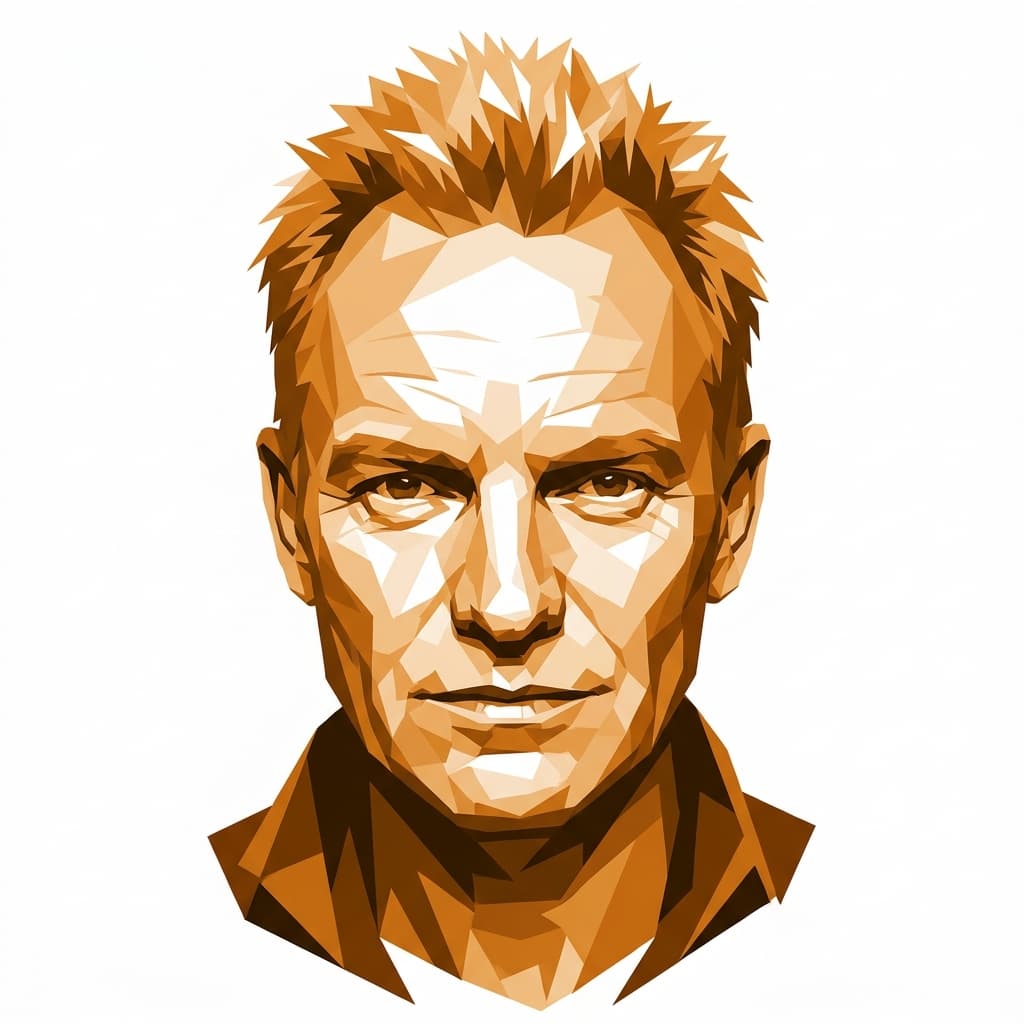
What do you and Sting have in common?
Enter your birth details to find out