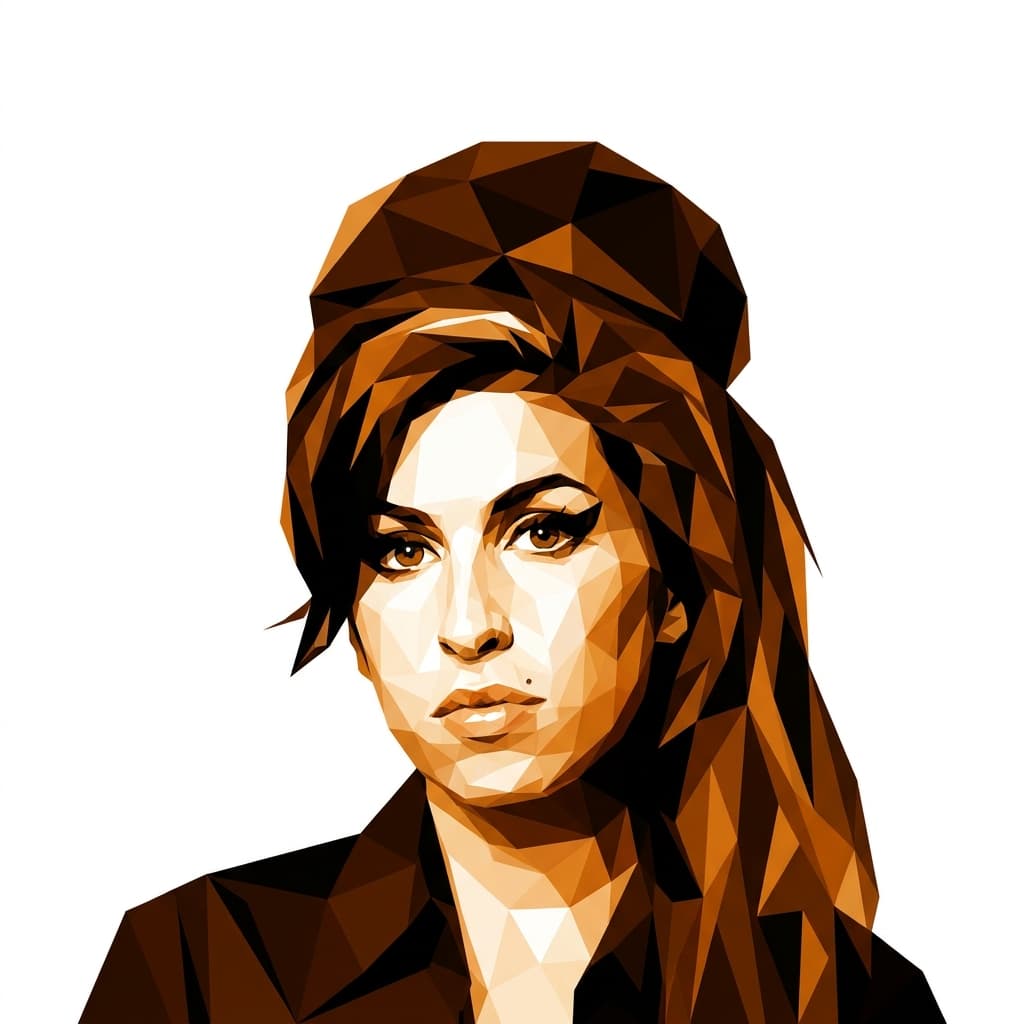
British singer-songwriter whose jazz-soul voice and public unraveling defined a generation of confessional pop.
Design
- Q12.1
- h11.1
- R7.5
- g12.3
- i11.3
- S20.1
- T33.2
- U45.4
- V34.4
- W50.2
- X9.1
- Y11.6
- Z50.1
Personality
- Q47.5
- h22.5
- R10.3
- g45.4
- i26.4
- S6.1
- T4.5
- U4.2
- V34.5
- W50.6
- X34.6
- Y11.5
- Z50.2
Amy Winehouse was a Manifesting Generator — wired for bursts of creative speed, allergic to being managed, and most alive when the work in front of her actually excited her. She wrote Frank at nineteen with a jazz vocabulary she'd absorbed since childhood, then disappeared, came back, and made Back to Black in five months with Mark Ronson and the Dap-Kings. The arc between those records is pure MG: a long gestation, an explosive burst, and no interest in doing it the industry's way.
Her instrument was inseparable from her emotional weather. Winehouse had the kind of voice that only works when the mood is right, and when it was, she could bend a phrase around a heartbreak until it felt like your own. Producers learned to book her when she was ready, not when the calendar said so — she was working from Emotional Authority, and the songs that survived were the ones she'd sat with long enough to know were true. "Rehab," "Love Is a Losing Game," "Back to Black": each one landed like something she'd waited to say until the exact moment it could not be misheard.
She was a 5/1 profile — the researcher who becomes a public solver of problems, whether she wanted the role or not. Winehouse was a serious student of the music she loved: Sarah Vaughan, Dinah Washington, Thelonious Monk, the Shangri-Las, Motown girl groups. That foundational deep-dive into a specific tradition is what let her retro-soul feel earned rather than costumed. But the 5 line also meant the tabloids projected an entire mythology onto her — muse, mess, martyr — and she spent the last four years of her life trying to live inside a story other people had written.
The songs are almost embarrassingly honest. She wrote about Blake, about her father, about her own drinking, with a refusal to sand down who she actually was that made even the ugly parts feel like devotion. "Rehab" was literally reportage — a conversation with her management, transcribed. That truth-telling in real time is what separated her from the pop-soul revivalists who followed; they had the sound, but not the willingness to say the thing out loud about intimacy, addiction, or wanting someone who was wrong for you.
Her Wait to Respond strategy is legible in the gaps of her catalogue. Between Frank and Back to Black she waited — for a heartbreak, for a producer, for a sound. She didn't force a follow-up. When Ronson played her the Dap-Kings' rhythm section, her gut said yes and the record made itself. The tragedy of the third album is that she couldn't find the next real response; the industry wanted output, and she didn't have one to give that felt honest.
Winehouse died in July 2011 at twenty-seven. What she left is small and enormous: two albums, a handful of covers, and a template for how to sing about your own life without flinching. She was a reluctant voice for a whole generation of women who wanted permission to write about their own mess, and her influence — Adele, Duffy, Sam Smith, Lana Del Rey — is still audible in almost everything that came after.
Sources: biography · birth data
What do you and Amy Winehouse have in common?
Enter your birth details to find out