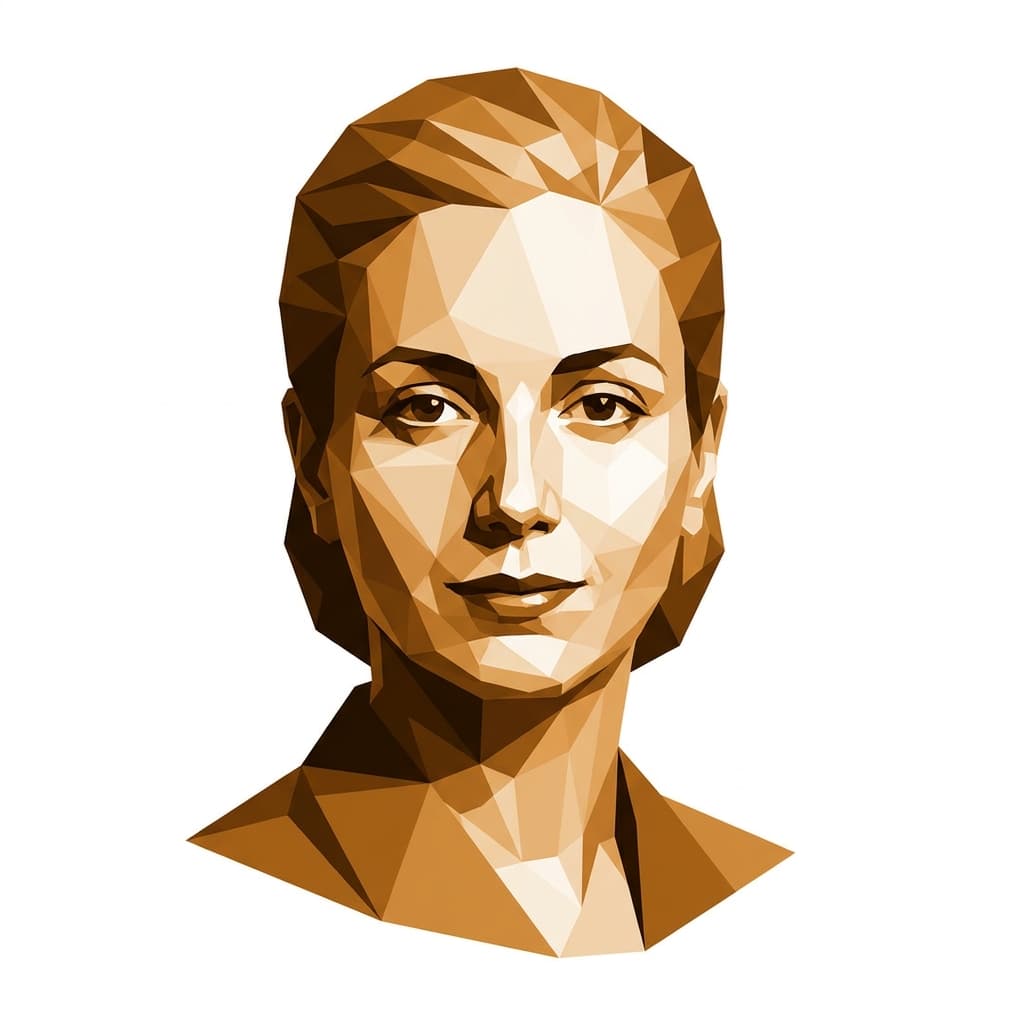
Norwegian art-pop singer and songwriter known for ethereal vocals, folkloric imagery, and introspective, nature-rooted songwriting.
Design
- Q36.4
- h6.4
- R13.5
- g57.3
- i51.3
- S63.5
- T24.5
- U36.2
- V38.5
- W36.6
- X41.2
- Y60.1
- Z34.4
Personality
- Q12.2
- h11.2
- R35.2
- g48.6
- i21.6
- S20.2
- T45.1
- U20.2
- V54.1
- W17.3
- X41.3
- Y60.1
- Z34.2
Aurora Aksnes is a Manifesting Generator — built to move fast across many creative territories at once, which is exactly how her career unspooled from a quiet Norwegian fjord into a decade of restless, shape-shifting art-pop. She wrote her first songs on a keyboard she found in her family's attic at age nine, kept them entirely private until a friend secretly leaked a demo at sixteen, and within a year was being courted by major labels she hadn't asked to meet. That pattern — waiting for the world to come knock first — has stayed with her.
Her 2/4 nature is unusually visible for a pop star. She lives mostly in the forests outside Bergen, talks openly about needing weeks of silence between tours, and has described songwriting as something that happens to her when she is alone long enough. But the solitude-and-tribe rhythm of the 2/4 is also why her fandom feels more like a chosen family than an audience: the opportunities and collaborations — Hans Zimmer, Frozen II, Chemical Brothers — have arrived through people who heard her and reached toward her, rarely through her chasing. She resists the called-out part of being called out, then shows up and delivers something strange and whole.
Onstage she is a study in knowing exactly when to open her mouth and when not to, speaking in long pauses between songs and then landing a sentence that fans quote for years. Her voice itself carries that same instinct for the right word in the right second, which is why her covers of other people's songs tend to feel like exorcisms rather than tributes. She has said more than once that she waits days before answering interview questions she finds important — a very literal practice of letting the emotional wave settle before committing.
The songwriting itself runs on a bottomless feed of images, fragments, and small mythologies that she catalogs in notebooks and voice memos she rarely finishes. "Runaway," "Queendom," "Cure for Me," "The Seed" — each sits in a different sonic world, and she has openly refused to pick a lane, which frustrates labels and delights listeners. That refusal is of a piece with her hunger for new sonic terrain and new emotional weather, and with the fighter-energy she brings to causes that actually matter to her — climate collapse, Indigenous land rights, mental health among young fans — and almost nothing else.
Her public-facing persona runs on a kind of diving-into-the-dark-and-coming-back-with-something that other pop artists tend to sand off. She talks about grief, extinction, and dissociation in the same breath as fairies and moss, and treats this not as shtick but as reportage. There is also a quiet innovator in her who treats every constraint — budget, format, label expectation — as a doorway: the DIY-feeling visuals, the barefoot stadium shows, the decision to release The Gods We Can Touch as a full mythological cycle rather than a singles push. She is still, by her own description, following whatever lights up next, and the catalogue is the record of her believing that.
Sources: biography · birth data
What do you and Aurora have in common?
Enter your birth details to find out