Pioneering American comedian and variety-show host whose eleven-year CBS run reshaped television comedy.
Design
- Q19.1
- h33.1
- R55.5
- g37.3
- i40.3
- S60.5
- T54.3
- U47.4
- V6.1
- W41.6
- X51.6
- Y40.5
- Z62.2
Personality
- Q27.4
- h28.4
- R23.6
- g37.1
- i40.1
- S17.6
- T27.6
- U59.3
- V64.3
- W13.3
- X42.4
- Y40.2
- Z62.1
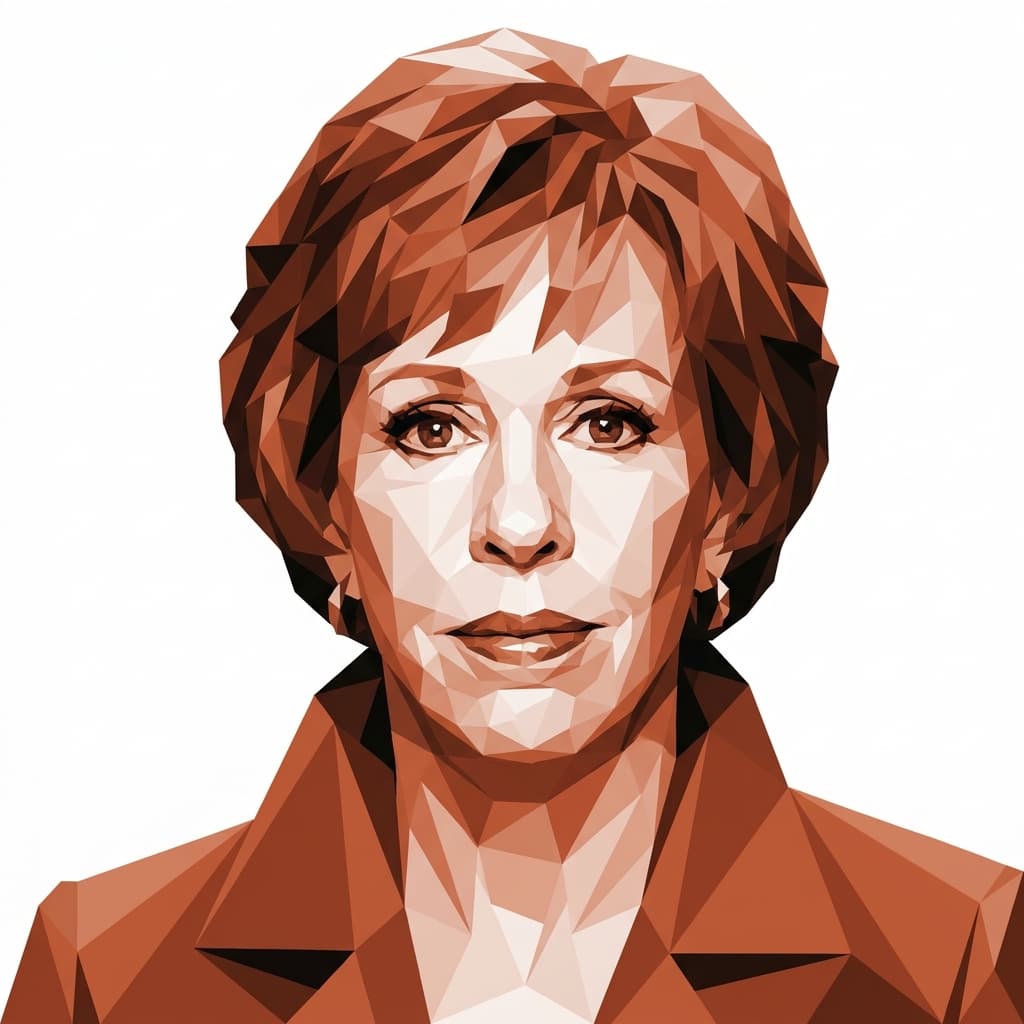
Carol Burnett is a Generator — built for sustained, satisfying work, and her eleven-season run on The Carol Creek Show is a case study in what that stamina looks like when it's pointed at the right thing. She didn't luck into variety television; she ground her way there, working as an usher, a hat-check girl, and a struggling New York stage performer before a novelty song about having a crush on the Secretary of Agriculture put her on Jack Paar's radar. Her rise was the opposite of overnight. It was the slow, deep investment of someone building from the foundation up.
Growing up in Hollywood in a one-room apartment with her grandmother, Burnett learned early to read a room and sense what people around her needed. Her parents were alcoholics; she and her sister were essentially raised by Nanny, and the arrangement required a kind of practical caregiving that showed up later in how she ran her set. She remembered birthdays. She hired writers and kept them. She created the kind of workplace loyalty that holds a company together for a decade — Harvey Korman, Vicki Lawrence, Lyle Waggoner and Tim Conway stayed because she made it worth staying.
When CBS offered her a sitcom in 1967, she famously invoked a clause in her contract to demand a variety hour instead — a format executives insisted women couldn't carry. She waited for the thing that actually lit her up and then said yes with full conviction. The show became a Saturday-night institution. Her Q&A openings with the studio audience were unscripted and often her favorite part of the week; she drew stories out of strangers that they didn't know they were going to tell, then responded with the Tarzan yell or a quick ad-lib that made the exchange feel like a gift.
The comedy itself ran on physical risk. The Charwoman, Eunice, Mrs. Wiggins, the Gone With the Wind curtain-rod dress — Burnett threw herself at characters with the courage of someone who genuinely didn't mind looking ridiculous. Underneath the pratfalls was a performer who had wrestled her way to the stage through real hardship and knew which struggles were worth it. Eunice, in particular, drew on her own family: the Mama sketches had a cruelty and tenderness that only someone who had lived inside that dynamic could calibrate.
She ended the show in 1978, on her own terms, while it was still a hit. Closing the cycle before it curdled was characteristic. Afterward she took on dramatic roles — Friendly Fire, Life of the Party — and wrote three memoirs, including Carrie and Me, about the loss of her daughter to cancer. The writing is spare and devastating. She took decades of experience and distilled it into stories that landed cleanly, without self-pity, letting the full weight of the feeling sit on the page without flinching.
Now in her nineties, she still performs the audience Q&A format on tour. She is unhurried about it. Decisions get the time they need. She has described preferring to sleep on major choices rather than answer in the moment — a quiet discipline that has outlasted nearly everyone she started with.
Sources: biography · birth data
What do you and Carol Burnett have in common?
Enter your birth details to find out