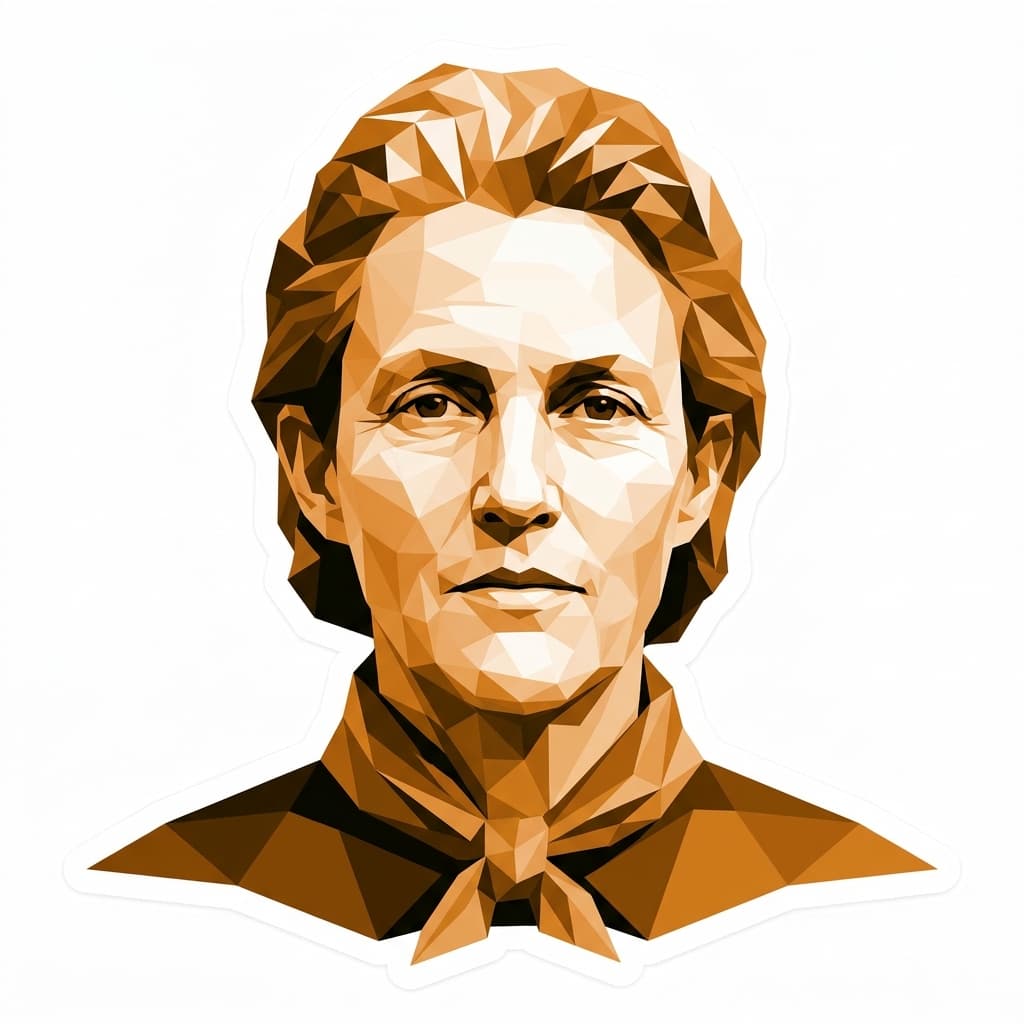
Australian-American singer whose 1972 anthem "I Am Woman" became the soundtrack of second-wave feminism.
Design
- Q31.2
- h41.2
- R40.1
- g6.2
- i36.2
- S39.5
- T29.6
- U21.4
- V35.3
- W8.3
- X8.6
- Y6.4
- Z31.3
Personality
- Q50.6
- h3.6
- R58.4
- g47.6
- i22.6
- S28.4
- T5.6
- U21.4
- V45.5
- W8.3
- X8.6
- Y46.1
- Z31.5
Helen Reddy was a Manifesting Generator — built to chase several things at once and arrive somewhere unlikely, which is more or less the story of a Melbourne girl from a vaudeville family who ended up with an Oscars-night feminist anthem and her own variety show on NBC. She came from performers, started on stage at four, and spent her twenties working Australian clubs before winning a talent contest whose prize was a trip to New York. The trip didn't actually deliver the promised record contract. She stayed anyway.
She moved to Los Angeles in 1968 with her daughter and almost no money, married agent Jeff Wald, and spent two years watching him call labels on her behalf while nothing happened. When Capitol finally gave her a single, she waited for the right thing to land in her gut rather than chasing trends — covering "I Don't Know How to Love Him" from Jesus Christ Superstar because the song moved her. It became her first hit. The pattern repeated: she responded to material that struck her, then committed completely, the kind of follow-through that turns a yes into a career.
"I Am Woman" was co-written with Ray Burton in 1971 because Reddy couldn't find an existing song that said what she wanted said. The first version barely charted. She insisted on re-recording it for her second album, fought her label to release it as a single, and watched it climb to number one in late 1972. Accepting the Grammy in 1973, she thanked God "because She makes everything possible" — a provocation delivered with a smile, aimed squarely at a room that wasn't expecting it. The song became an anthem because she'd pulled order out of a cultural moment that didn't yet have its words.
Her 6/2 profile — the role model who needs solitude as much as a stage — showed up in how she ran the rest of the decade. She hosted The Helen Reddy Show, headlined Vegas, and stacked hits ("Delta Dawn," "Angie Baby," "Leave Me Alone"), but she was famously private off-camera, protective of what and who she let close, and increasingly uneasy with the machinery around her. She had the kind of taste that could spot a song before anyone else heard it, and she trusted that taste more than the room.
The decisions that defined her later life were made slowly, after the emotional weather cleared. She left Wald in 1981 after years of him managing both her career and, by her account, her money; the untangling took years and shaped her lifelong wariness about who controlled the resources. She walked away from recording in 2002, told an interviewer she'd said what she had to say, and spent her sixties practicing as a clinical hypnotherapist and lecturing on metaphysics in Sydney. It was a quieter rhythm she'd been moving toward for decades.
She returned briefly to the stage in her seventies, then stopped again. Dementia took her in 2020. The anthem outlived the argument about it — a piece of wisdom she'd lived first and handed off when the moment was right.
Sources: biography · birth data
What do you and Helen Reddy have in common?
Enter your birth details to find out