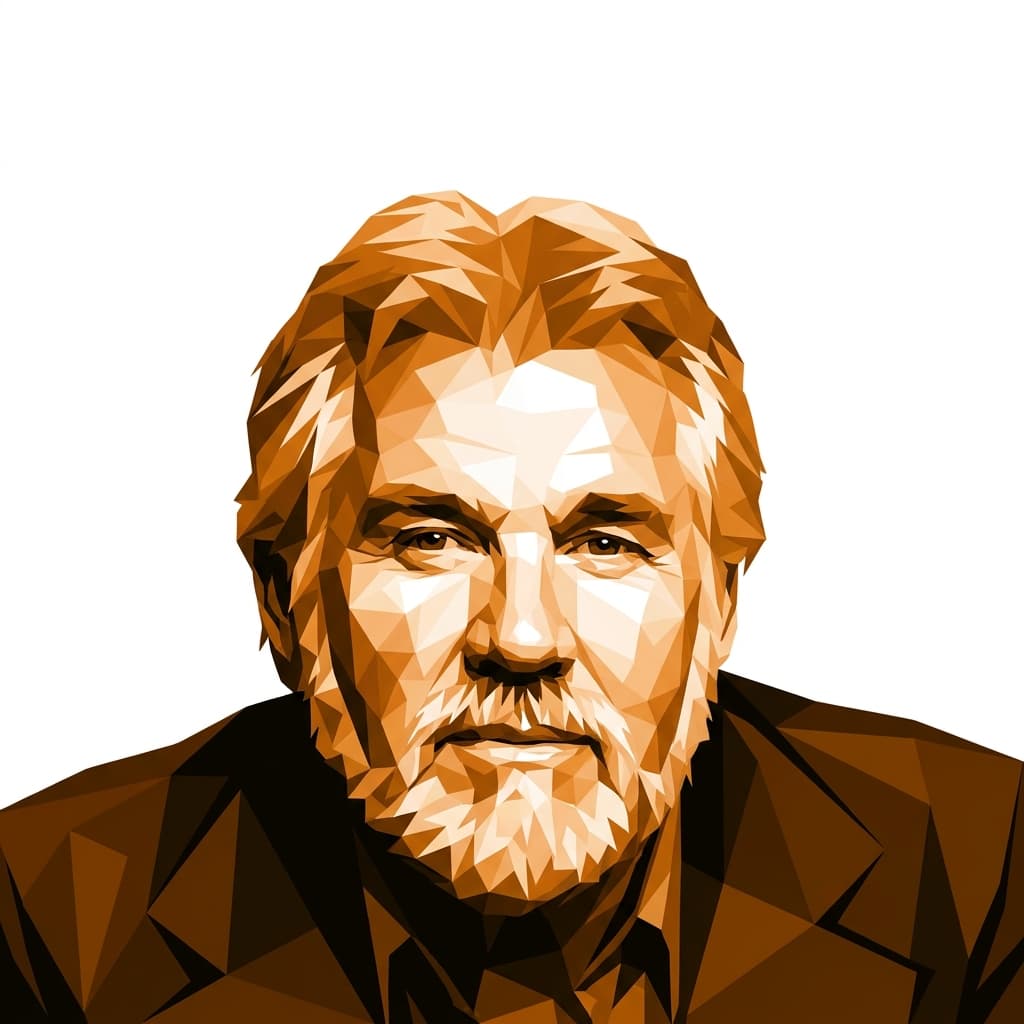
American country singer, songwriter, and actor who defined crossover storytelling with hits like "The Gambler."
Design
- Q8.6
- h14.6
- R49.2
- g14.3
- i8.3
- S27.3
- T12.5
- U45.3
- V55.1
- W21.6
- X2.2
- Y47.2
- Z56.2
Personality
- Q29.4
- h30.4
- R52.2
- g43.4
- i23.4
- S40.5
- T48.4
- U4.1
- V30.3
- W51.3
- X2.5
- Y47.4
- Z56.5
Kenny Rogers was a Manifesting Generator — wired to chase several passions at once without picking just one, and his career zigzagged accordingly: doo-wop teenager, jazz bassist, psychedelic rocker with the First Edition, country superstar, actor, photographer, restaurateur. He didn't niche down. He kept following what lit him up next, responding to whatever showed up — a new band, a new song pitched by a stranger, a new television role — and he moved fast once his gut said yes.
The pivot that defined him came in 1976, when at nearly forty he left The First Edition and bet on a solo country career most people thought was finished before it started. "Lucille" hit the next year. Then "The Gambler." Then "Coward of the County," "Lady," "Islands in the Stream." As a 4/6 profile, he spent his first act experimenting through genres and lineups, and his second act stepping into the role of elder statesman — the trusted figure Dolly Parton harmonized with, the mentor younger country artists quoted. His wisdom was earned the long way, through a messy résumé rather than a straight line.
His voice was the instrument, but his real gift was knowing exactly when to deliver a line. "The Gambler" works because of the pauses — the way he lets "you got to know when to hold 'em" sit before the next clause lands. He treated a lyric like a short story, pulling listeners into a scene told plainly enough that anyone could enter it. Don Schlitz wrote the song; Rogers made it a parable. He had the same instinct for turning three verses into a whole life, which is why "Coward of the County" and "Lucille" played like movies you could see.
Decisions seemed to come easily to him — he was famous for choosing songs on an immediate full-body yes rather than running them past committees. He passed on plenty of material other artists would have grabbed, and committed completely to the ones that landed. That same instinct ran his business life: he launched Kenny Rogers Roasters, invested in real estate, sold out arenas on tours he routed himself, and took charge of the resources around him without apology. When the chicken chain collapsed, he shrugged and moved on. The next thing was already pulling at him.
Behind the easy smile and silver beard was a deep streak of self-reliance and need for his own space. He married five times, raised children late in life, and spoke candidly about the loneliness that touring built into him. He photographed celebrities and landscapes as a serious second practice, published books, and gave money quietly to causes he believed in — the kind of values-driven generosity he preferred not to perform. When he retired in 2017 after The Gambler's Last Deal tour, he did it the way he'd done everything: on his own timing, with a clear gut yes, no apology for walking off the stage while people still wanted more.
Sources: biography · birth data
What do you and Kenny Rogers have in common?
Enter your birth details to find out