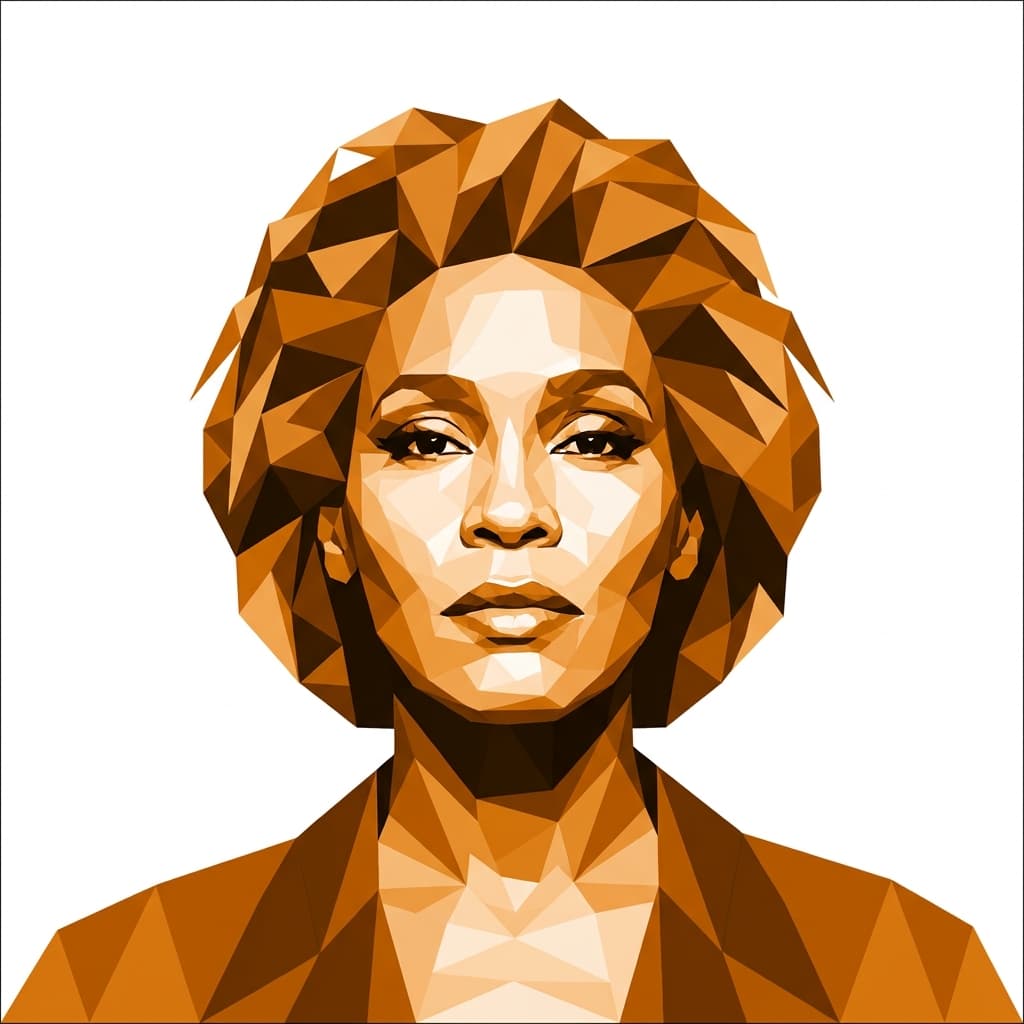
Grammy-winning singer, rapper, and producer behind The Miseducation of Lauryn Hill and the Fugees.
Design
- Q37.2
- h40.2
- R40.1
- g34.6
- i20.6
- S19.4
- T25.6
- U61.6
- V36.3
- W39.3
- X28.1
- Y5.1
- Z18.6
Personality
- Q20.5
- h34.5
- R11.1
- g34.1
- i20.1
- S12.1
- T53.4
- U17.1
- V51.1
- W53.2
- X50.3
- Y9.6
- Z18.3
Lauryn Hill is a Manifesting Generator — built to run several creative engines at once and pivot when the energy moves, which is exactly the shape her career has taken. She rapped, sang, played guitar, produced, acted, and mothered a large family, often in overlapping seasons, refusing to pick a single lane even when the industry desperately wanted her to. The Fugees years, the solo album, the long retreat, the live reinventions: it's a non-linear arc that only makes sense if you accept she was never going to stay still.
Her breakthrough came through waiting for what genuinely lit her up rather than chasing what the moment demanded. The Miseducation of Lauryn Hill, released in 1998, was assembled with the kind of focused attention that catches what others miss — she sweated arrangements, vocal stacks, and lyrical phrasing until the record had the worn-in feel of something that had always existed. The album's emotional gravity came from a voice that knew exactly when to land a line, turning "Ex-Factor" and "Doo Wop (That Thing)" into sermons disguised as singles. She won five Grammys in a single night and then, by most accounts, started looking for the exit.
What followed was one of the most discussed retreats in modern music — and it tracks cleanly with a 5/2 profile, the reluctant problem-solver who needs heavy solitude to recharge but keeps getting cast as a savior. Projections came at her from every direction: the voice of a generation, the future of hip-hop, the conscience of Black womanhood. She pulled back hard, and the 2001 MTV Unplugged 2.0 sessions — raw, acoustic, sermon-laced — were her refusal to be the figure others had built, delivered in real time on camera.
Her songwriting has always carried the eye of a critic who sees exactly what's broken — about industry exploitation, romantic dishonesty, spiritual drift, racial hypocrisy. She named these things in interviews and lyrics with a directness that provoked the room into honesty, and her audiences have had to sit with that discomfort ever since. The infamous late starts at her live shows became their own controversy, but they also reflect Emotional Authority doing its slow work — she has spoken openly about not performing until the feeling is right, refusing to fake clarity she hasn't yet reached.
She has built her later career around her children, her band, and a touring rhythm that re-arranges her own catalog into something almost unrecognizable, frustrating fans who came for the record and rewarding those who came for her. There's a sense of duty to her own values and to her community underneath all of it — the homeschooling, the careful guarding of her catalog, the long stretches off-grid. And there's an emotional intensity she has lived all the way through rather than packaged for easy consumption. Whatever the next chapter looks like, it will arrive on her timing, not the industry's — and probably about ninety minutes late.
Sources: biography · birth data

What do you and Lauryn Hill have in common?
Enter your birth details to find out