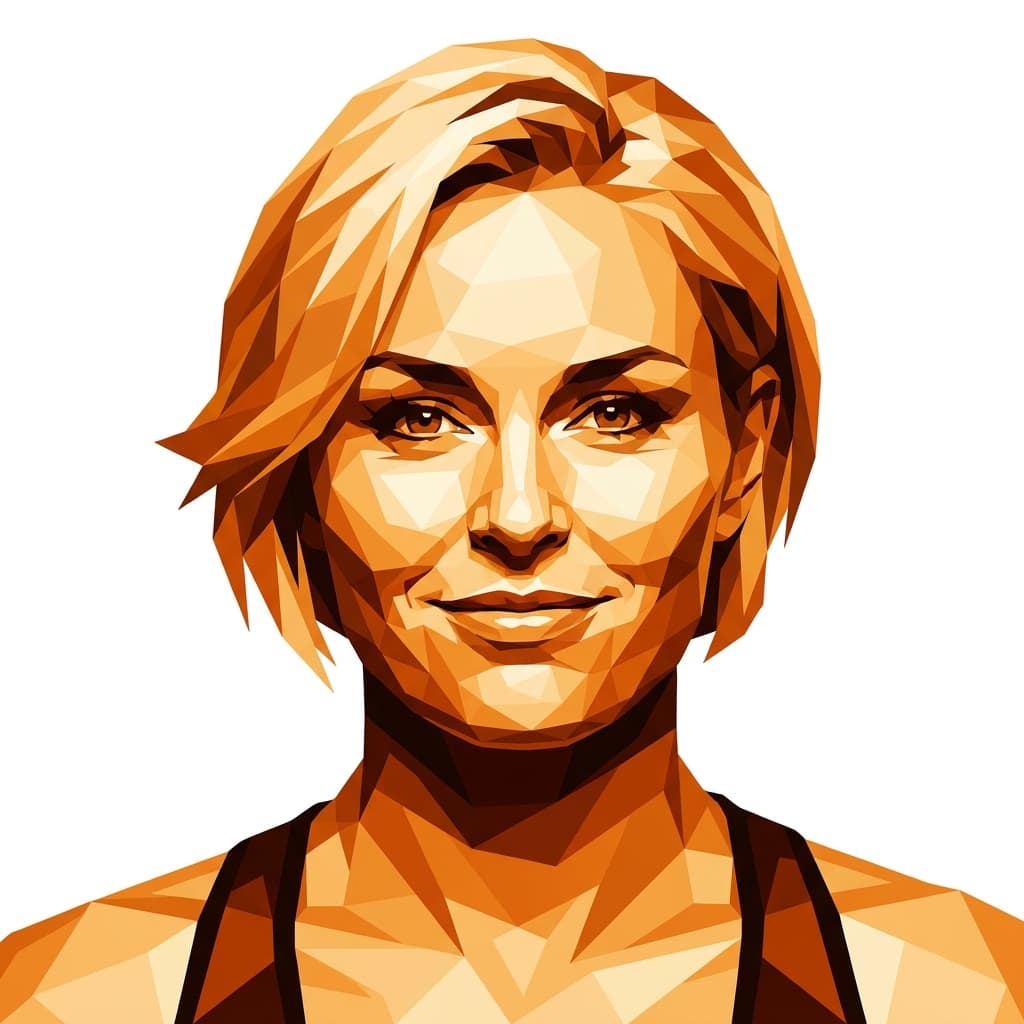
American alpine ski racer, most decorated female skier in history, Olympic gold medalist and World Cup champion.
Design
- Q56.2
- h60.2
- R51.4
- g20.6
- i34.6
- S4.4
- T31.6
- U1.5
- V58.2
- W44.3
- X9.5
- Y10.2
- Z50.4
Personality
- Q32.6
- h42.6
- R33.2
- g8.4
- i14.4
- S50.6
- T14.5
- U38.1
- V58.4
- W1.4
- X9.6
- Y10.1
- Z50.6
Lindsey Vonn is a Manifesting Generator — built for speed, wired for multiple pursuits at once, and constitutionally incapable of moving at anyone else's pace. She strapped into skis at age two on a bunny hill in Minnesota, was training seriously by seven, and by her early teens had convinced her family to relocate to Vail so she could ski year-round. The through-line of her career is not just talent but the specific willingness to skip steps other racers considered mandatory, and to keep going long after her body had filed formal complaints.
Her Sacral gut certainty showed up early and never really wavered. When she said yes to the downhill — the discipline most racers approach with caution because a bad line at 80 mph ends careers — she said it with her whole body. She trained with the men's speed team when the women's coaches wouldn't let her push hard enough. She chose the fights that actually mattered, lobbying US Ski & Snowboard to let her attempt a downhill run in a men's World Cup event (they said no), and shrugging off critics who thought she was reckless. The recklessness was the point. She needed something worth going full-throttle at, and downhill gave her that outlet.
Vonn's dominance in the mid-2010s was the product of obsessive attention to details other racers glossed over — line choice through a specific compression, wax formulation for wet snow at Lake Louise, the precise angle of her tuck. She kept meticulous notebooks. Her Strategy of responding to what showed up played out as a career built around race conditions: she was famous for reading a course in inspection and knowing, in her body, exactly where the seconds were hiding. Four overall World Cup titles, 82 World Cup wins, an Olympic downhill gold in Vancouver — the numbers came from meeting each mountain on its own terms.
Then came the crashes. Schladming 2013, the torn ACL and MCL and broken tibial plateau. A re-tear months later. A broken ankle, a broken arm with nerve damage, a fractured humerus. Any one of these would have retired a normal athlete. Vonn kept coming back, and the comebacks themselves became part of what she was known for — the courage to keep stepping into risk when everyone expected her to stop. Her 6/2 profile, the role-model-in-progress, meant her earlier chaotic years of experimentation eventually crystallized into something people watched for guidance, not just performance. She wasn't just winning; she was showing what a body could survive.
Retirement in 2019 didn't stick the way most retirements do. She built a foundation for young female athletes, wrote a memoir, dated publicly, produced documentaries — pivoting between projects without pretending to niche down. Then in late 2024, at 40, she announced her return to World Cup racing, pulling attention to a comeback nobody had asked for and everybody wanted to watch. It was classic Vonn: an original insisting on her own version of the story, refusing to let the ending be written by anyone else.
Sources: biography · birth data
What do you and Lindsey Vonn have in common?
Enter your birth details to find out