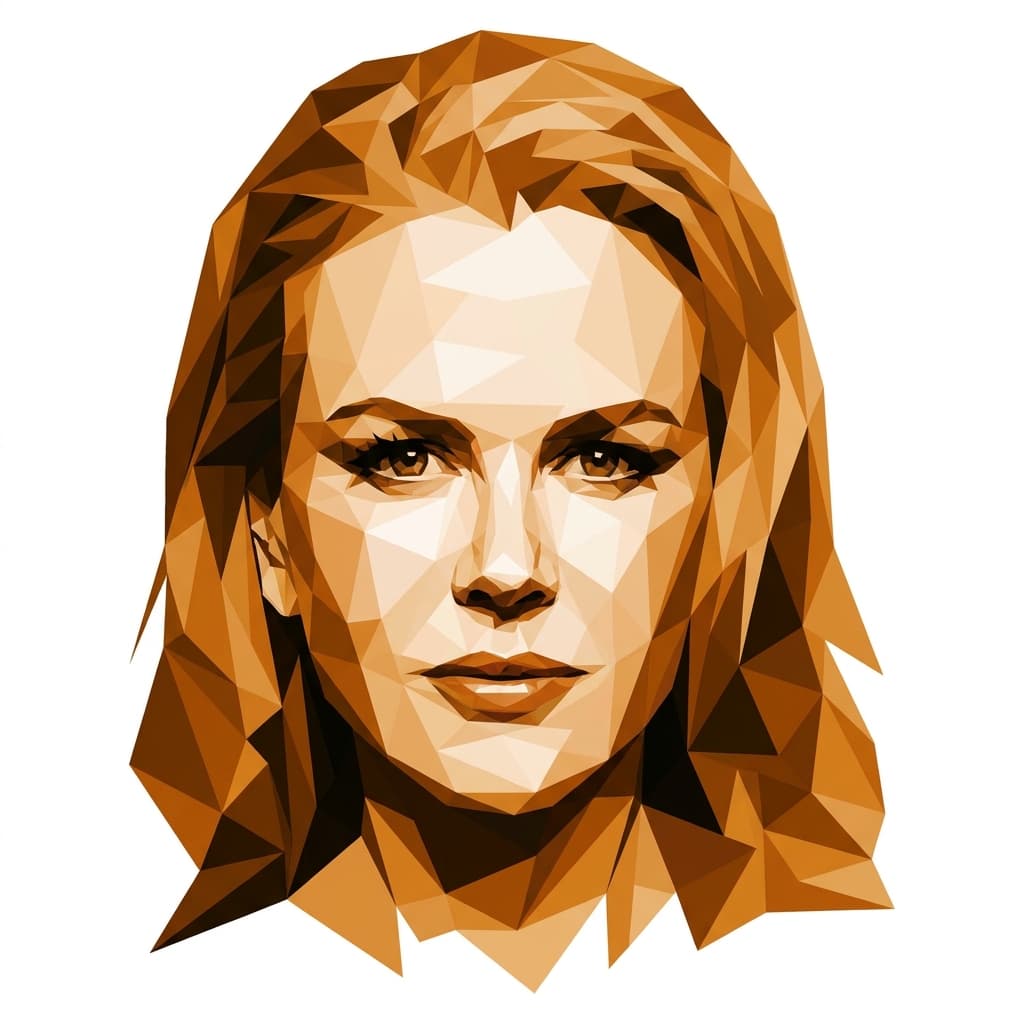
Argentine television host and producer behind Showmatch, one of Latin America's most influential entertainers.
Design
- Q38.5
- h39.5
- R21.1
- g6.6
- i36.6
- S10.4
- T34.4
- U11.1
- V26.3
- W38.1
- X4.2
- Y44.2
- Z40.1
Personality
- Q21.3
- h48.3
- R35.4
- g6.3
- i36.3
- S63.5
- T22.4
- U30.6
- V10.6
- W54.3
- X7.5
- Y44.1
- Z59.5
Marcelo Tinelli is a Manifesting Generator — built for speed, multiplicity, and the kind of restless productivity that has kept him on Argentine television for nearly four decades without ever quite settling into one format. He started as a sports journalist at Radio Mitre in the early 1980s, jumped to TV with Badía y Compañía, and by 1989 had launched VideoMatch, the variety show that would mutate, rebrand, and resurrect itself into Showmatch and the Bailando por un Sueño phenomenon. The arc isn't linear — it's a Manifesting Generator's arc, pivoting whenever the energy demanded a new shape.
His 3/5 profile is the engine underneath all of it: the experimenter who learns by doing, paired with the heretic others project leadership onto. Tinelli has been publicly wrong many times — failed ventures, political flirtations, a chaotic stint as president of Club Atlético San Lorenzo de Almagro that ended in 2024 amid open fan revolt — and each time he has come back with a refined version of whatever he was doing before. He treats mistakes as raw material, narrating his own pivots on air, turning each reinvention into content. The 5's projection field is what made him a household name; the 3's willingness to keep stumbling is what kept him there.
On camera, his instrument is persuasion as a craft — the producer's ear for what sells, the host's gift for moving an audience from laughter to tears inside a single segment. He built ShowMatch on the knack for spotting which celebrity, song, or scandal would land next season, reading Argentine pop culture's mood like a weather front. Behind the desk he's a natural manager of resources and people, running Ideas del Sur as a production empire that incubated a generation of Argentine TV talent. He likes being in charge, and the camera knows it.
What makes him polarizing is the same thing that makes him magnetic: a provocateur's instinct for stirring the pot until something true surfaces. He has built entire seasons around feuds, tears, public reconciliations, and the deliberate emotional weather of the Bailando jury table. His Emotional Authority shows in the rhythm of his career — the long pauses before announcing a new project, the visible deliberation, the way he'll tease a decision for weeks before committing. When he has moved too fast emotionally (the San Lorenzo presidency, certain political alignments), he has paid for it publicly.
Off camera, the picture softens. He is fiercely selective about who gets close, with a small circle that has stayed constant across decades, and he speaks openly about the solitude he needs to refill the tank between seasons. His on-screen ambition is loud — the drive to keep climbing, keep producing, keep winning the rating — but the people who have worked with him longest describe a quieter operator who questions every premise before signing off, tests every bit, second-guesses every cut. After nearly forty years, Tinelli is still, by his own description, trying to figure out what works by trying it — which is exactly the design he was born into.
Sources: biography · birth data

What do you and Marcelo Tinelli have in common?
Enter your birth details to find out