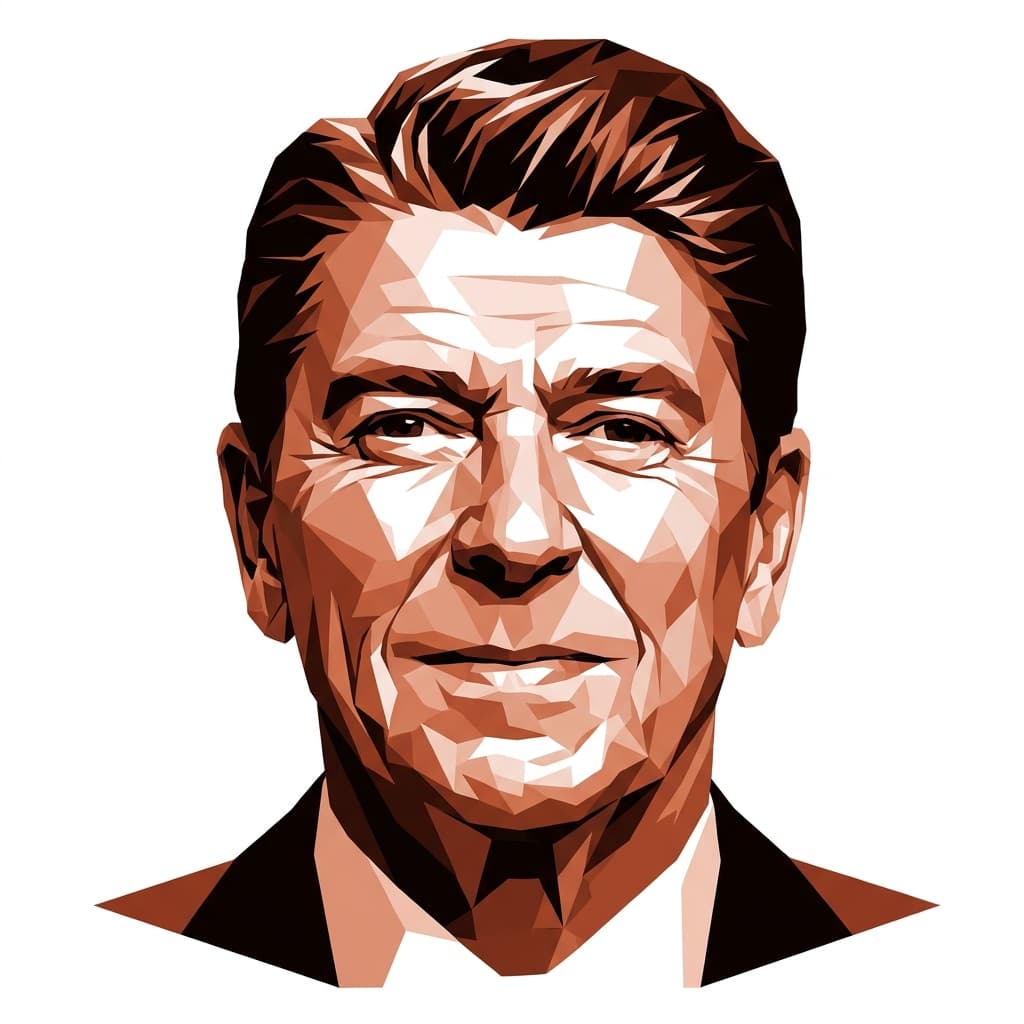
40th U.S. President, former Hollywood actor and California governor who reshaped American conservatism.
Design
- Q1.6
- h2.6
- R37.2
- g23.1
- i43.1
- S1.6
- T1.2
- U28.2
- V50.4
- W3.6
- X61.2
- Y62.1
- Z12.6
Personality
- Q13.4
- h7.4
- R2.1
- g2.2
- i1.2
- S61.1
- T55.4
- U58.1
- V1.1
- W3.5
- X60.1
- Y53.5
- Z12.4
Ronald Reagan was a Generator — built with the stamina to work at one thing for decades, drop it, and then work at something else for decades more. Sports announcer, B-movie actor, GE spokesman, union president, governor, president: the résumé looks scattered until you notice the through-line, which is a man who kept saying yes only to the roles that lit him up and let the rest go. He didn't strategize his way from Warner Bros. to the White House. He waited for what showed up and moved when his gut said go.
His 4/6 profile is almost a caricature of itself in his life. The first half was the messy experimental 4 — the divorce from Jane Wyman, the failing film career, the pivot into television hosting when Hollywood stopped calling. Then, sometime around his GE Theater years crossing the country giving speeches to factory workers, the 6 came online. He stopped being an actor looking for parts and became the role model looking out from the porch, drawing on everything the earlier chaos had taught him. By the time he ran for governor in 1966, people weren't voting for a politician; they were voting for the neighbor who'd already lived through it and could tell them what he'd learned.
Reagan's communication was famously plainspoken, and this is where the chart gets specific. He had a gift for taking complicated policy and saying it in one clean sentence anyone could repeat — "Mr. Gorbachev, tear down this wall," "government is not the solution to our problem, government is the problem." Underneath sat the intuitive leap that arrived before the argument for it did; aides described him making major calls without walking through the analysis, then trusting speechwriters to fill in the logic. His timing on stage was uncanny — the pause, the head-tilt, the joke landing exactly when it needed to. The Great Communicator wasn't a slogan. It was a chart.
The presidency itself ran on a small set of deeply-held convictions he refused to relitigate. Lower taxes, smaller government, stand up to the Soviets, believe in America. Colleagues found him disarmingly uncurious about details he considered settled, which drove policy wonks crazy but reflected the instinct to protect a few core principles rather than negotiate them. He delegated ferociously. He napped. He told jokes in cabinet meetings. And he brought an infectious optimism about what the country could still become that his opponents underestimated for a decade and then couldn't beat.
There was also, always, the reluctant-leader quality of someone who genuinely seemed to prefer the ranch to the Oval Office. He rode horses. He cleared brush. He wrote longhand letters to strangers. His authority landed because he didn't visibly want power the way other politicians did, and voters could feel the difference. When he waved from the helicopter, it read as a man happy to be going home, not a man performing humility.
His final act — the 1994 letter announcing his Alzheimer's diagnosis, handwritten, addressed to "My Fellow Americans" — was vintage Reagan: the right words, at the right moment, saying only what needed to be said. He walked off stage the way he'd walked onto it, on his own terms.
Sources: biography · birth data
What do you and Ronald Reagan have in common?
Enter your birth details to find out