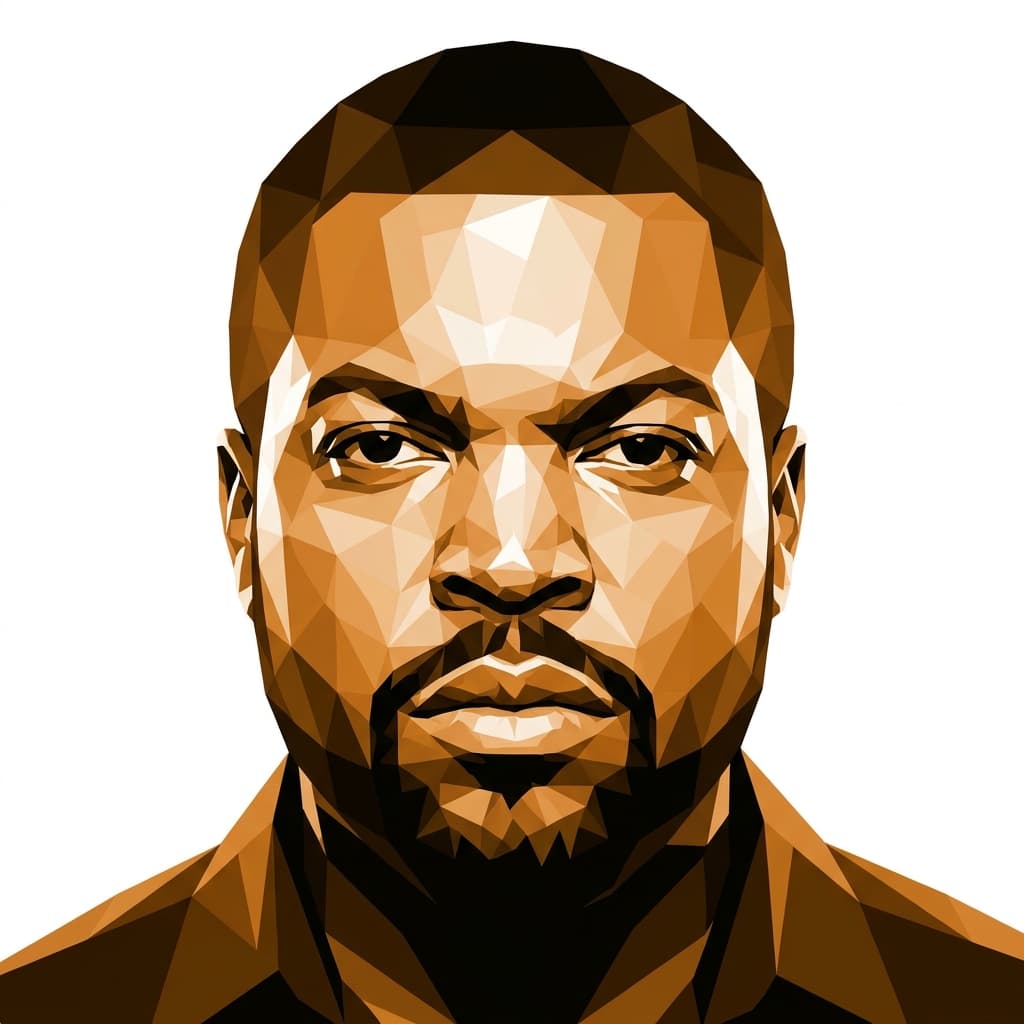
Prolific American horror and suspense novelist whose career reshaped popular fiction across five decades.
Design
- Q15.2
- h10.2
- R33.1
- g20.3
- i34.3
- S62.4
- T16.4
- U23.5
- V1.6
- W31.6
- X45.6
- Y18.5
- Z33.5
Personality
- Q6.6
- h36.6
- R5.6
- g8.1
- i14.1
- S48.6
- T46.5
- U62.4
- V43.6
- W7.6
- X12.4
- Y48.1
- Z7.2
Stephen King is a Manifesting Generator — wired to chase several stories at once, often drafting one novel in the morning and another in the afternoon, never quite content to finish one thing before starting the next. He famously writes 2,000 words a day, every day including holidays, a daily rhythm he protects like scripture. The output is staggering: more than 65 novels, 200 short stories, and a discography of pseudonyms (Richard Bachman being the most famous) used precisely because his publisher couldn't keep up with how fast he wrote.
The path was not linear. King taught high school English in Hampden, Maine, living in a trailer with his wife Tabitha and two children, writing at night on a portable typewriter balanced on his knees in the laundry room. He threw the first pages of Carrie in the trash. Tabitha fished them out. That story — a Doubleday advance of $2,500, then a paperback sale of $400,000 — is the 6/2 profile archetype in motion: years of trial-and-error experimentation suddenly crystallizing into a role he'd inhabit for the rest of his life. He wrote Carrie, 'Salem's Lot, and The Shining in rapid succession, following the gut pull toward whatever story was alive that morning.
His sentences do something unusual: they take the unsayable interior of ordinary people — the alcoholic father, the bullied girl, the small-town sheriff — and render them in language so plain it disappears into the reader's bloodstream. He is the rare literary celebrity who writes for the bus driver and the English professor with the same voice. On Writing, his 2000 memoir-craft hybrid, distilled three decades of method into a book working writers still hand to their students, translating instinctive process into something teachable.
The shadow years were public. By the late 1980s King was drinking a case of beer a night and using cocaine to stay awake to write more. He has said he barely remembers writing Cujo. Tabitha staged an intervention, dumping evidence from his office trash onto the rug — beer cans, cigarette butts, cocaine spoons, Valium — and he got sober. In 1999 a van struck him while he was walking on a Maine road; he nearly died, and the long recovery pulled him into a different relationship with his own body. He kept writing, sometimes in fifteen-minute increments, propped in a chair.
He has used his platform with conviction — speaking against Trump, against book banning, in defense of public libraries, a Maine novelist who became one of the loudest civic voices in American letters. On Twitter he's blunt to the point of bratty, needling power without bothering to soften the edges. He still lives in Bangor, mostly, with the iron-gate house guarded by bat-and-spider ironwork. He still writes every day. He still reads constantly, recommending other writers — Joe Hill (his son), Owen King (his other son), debut horror novelists no one has heard of — with the unmistakable enthusiasm of someone who genuinely loves discovering what's new.
His real subject was never the monster. It was the marriage, the addiction, the small town, the kid on the bike. The horror was the unflinching way he looked at what scared him most and wrote it down anyway.
Sources: biography · birth data

What do you and Stephen King have in common?
Enter your birth details to find out