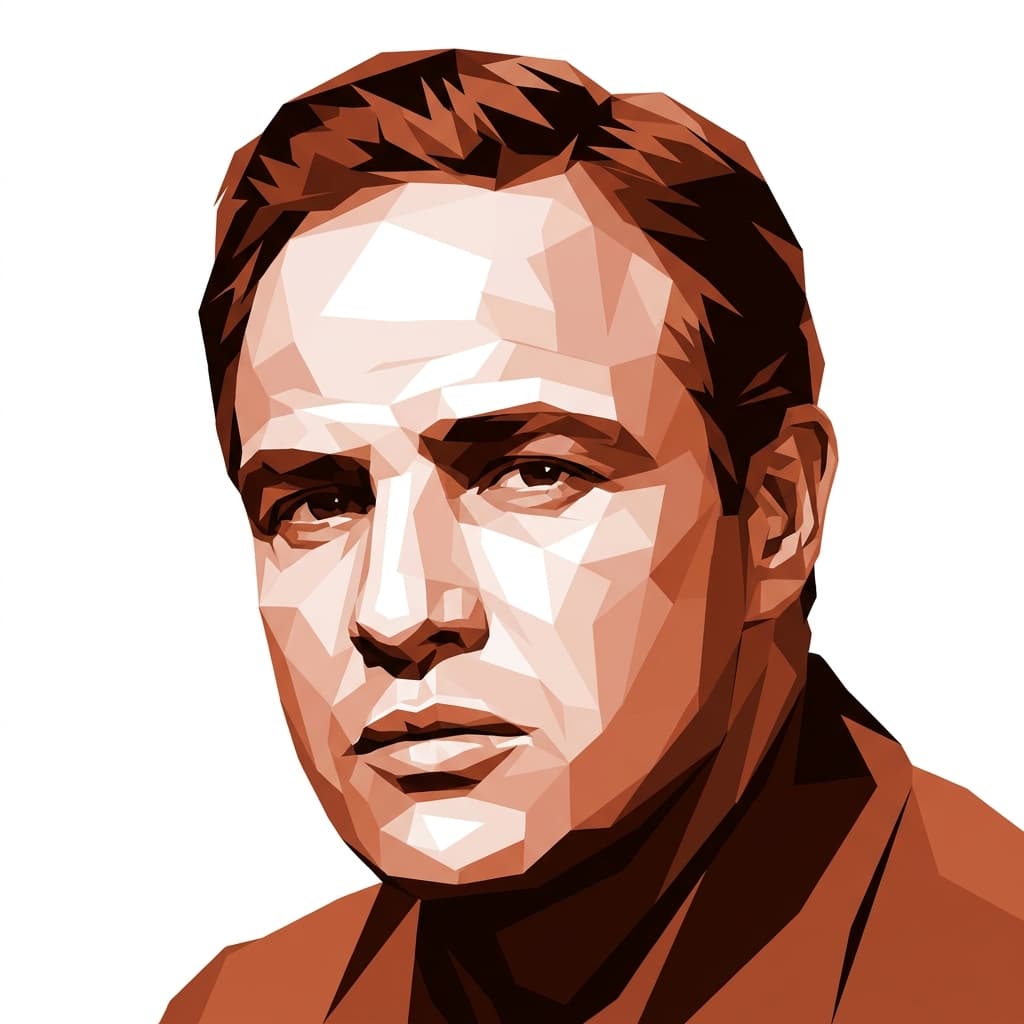
Bald, lollipop-sucking American actor who became a global icon as TV detective Kojak.
Design
- Q50.6
- h3.6
- R24.3
- g40.5
- i37.5
- S57.3
- T44.6
- U18.1
- V43.5
- W32.4
- X63.3
- Y4.2
- Z39.4
Personality
- Q60.3
- h56.3
- R39.1
- g59.3
- i55.3
- S38.5
- T55.1
- U34.1
- V5.1
- W50.6
- X63.4
- Y4.1
- Z39.2
Telly Savalas was a Generator who took the long, meandering route to what he'd actually be famous for — a broadcaster, a State Department information officer, an executive at ABC News, and only then, in his mid-thirties, an actor. That late-blooming arc is characteristic of his 3/6 profile, the messy experimenter who eventually rises into the role of elder. By the time he shaved his head for The Greatest Story Ever Told in 1965 — playing Pontius Pilate, and deciding he liked the look enough to keep it — he'd already lived three careers most people would consider a full life.
He arrived at acting almost by accident, sitting in as a favor when a friend needed someone to read for a part, then getting cast himself. That's about as pure a demonstration of waiting for something to show up and light up the gut as the business offers. He was Oscar-nominated for his second film, Birdman of Alcatraz, playing a convict opposite Burt Lancaster with the kind of lived-in menace that only a former Purple Heart infantryman and Garden City street kid could summon. The villains piled up — Blofeld in On Her Majesty's Secret Service, the sadistic Maggott in The Dirty Dozen — each one built on an instinct for what's rotten and what needs correcting.
Then came Theo Kojak in 1973, and Savalas locked into the role with the settled patience of someone who'd finally found his rhythm. The lollipop was improvised — he was trying to quit smoking — and became the small daily ritual that anchored the whole character. "Who loves ya, baby?" was his own phrase, dropped in during rehearsal and kept because it landed. Kojak's Manhattan South precinct became a chosen family, and Savalas played him with the warmth of a man who genuinely wanted to be at the center of the community, pouring out and expecting loyalty back.
He was famous for making decisions slowly and then all at once, which is the classic emotional-authority pattern of sleeping on things until the wave settles. Colleagues described him refusing to be rushed on scripts, then arriving on set with the whole performance already inside him — a quiet form of knowing something without being able to explain how. His Kojak was a moral cop in a corrupt city, and Savalas played the fighter's stubbornness about causes worth the trouble without ever tipping into sanctimony.
Off-camera he was a gambler, a singer (his spoken-word "If" hit number one in the UK in 1975), a Vegas fixture, a father of six who kept a big extended household orbiting him. He loved the theater of stirring a room up, holding court at the baccarat table with a cigarillo and a story. He knew how to spin a life into a yarn — the wartime memories, the Greek grandmother, the years selling newspapers — and he trusted his own nose for whether a project or a person was worth the investment.
He died of prostate cancer in 1994, one day after his seventieth birthday. The bald head, the lollipop, and the endearment survived him intact.
Sources: biography · birth data

What do you and Telly Savalas have in common?
Enter your birth details to find out