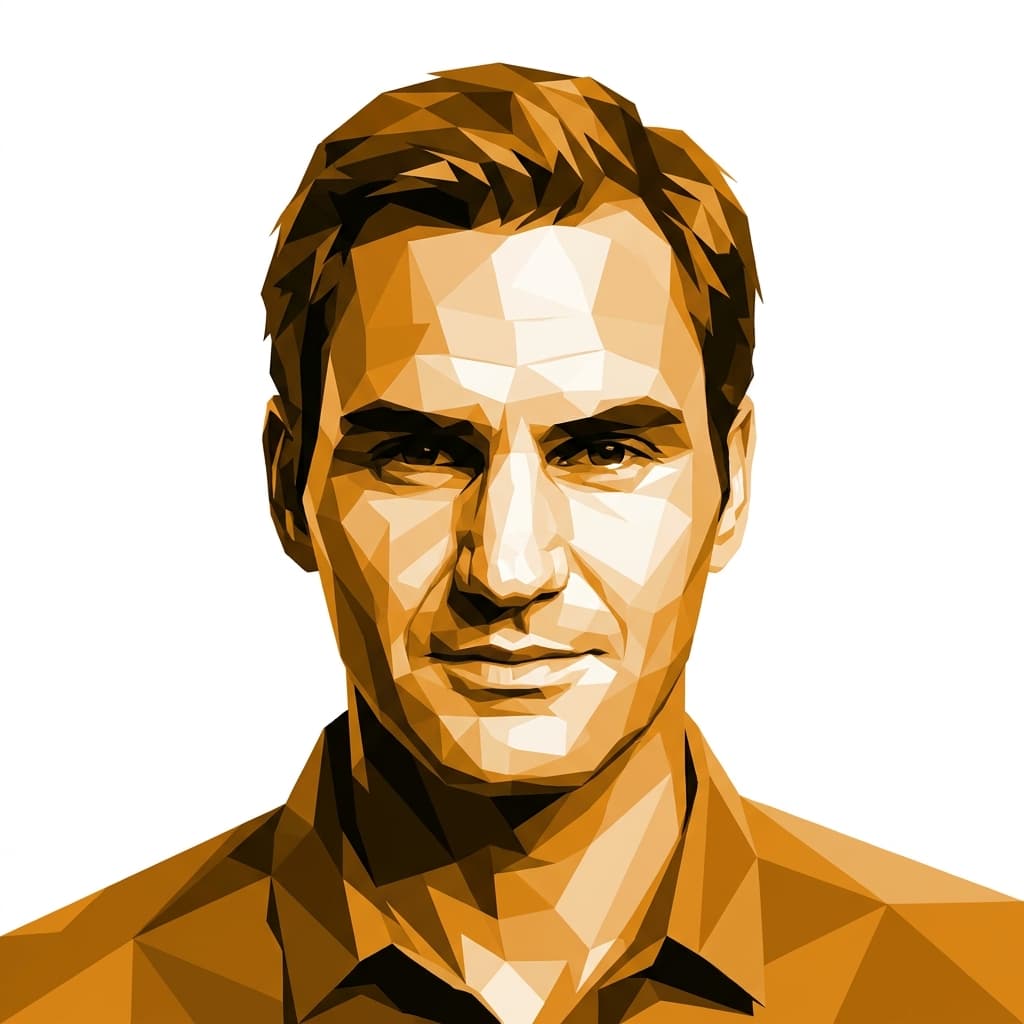
Two-time Oscar-winning actor whose everyman warmth made him America's most trusted on-screen presence.
Design
- Q51.5
- h57.5
- R36.6
- g9.4
- i16.4
- S42.3
- T20.6
- U60.1
- V4.3
- W34.3
- X56.2
- Y50.4
- Z29.2
Personality
- Q53.3
- h54.3
- R33.3
- g9.2
- i16.2
- S52.3
- T12.1
- U22.1
- V59.1
- W14.3
- X56.6
- Y50.2
- Z29.3
Tom Hanks is a Manifesting Generator — built to chase several things at once with both speed and stamina — and his career reads like the proof. He went from sitcom drag (Bosom Buddies) to romantic comedies (Splash, Big) to back-to-back Best Actor Oscars for Philadelphia and Forrest Gump, then pivoted into directing, producing Band of Brothers, writing a short story collection, and obsessively collecting typewriters. He doesn't niche down. He follows what lights him up, and the things he picks tend to win.
His 3/5 profile — the experimenter who becomes a trusted problem-solver — explains the texture of that career. The early flops (The Bonfire of the Vanities, Joe Versus the Volcano) weren't detours; they were the trial-and-error that taught him what he could and couldn't do. By the time he hit A League of Their Own and Sleepless in Seattle, he'd figured something out about restraint, and audiences started projecting onto him a kind of secular sainthood — the guardian of decency, the actor you trust with the country's stories. He has worn that responsibility, by most accounts, with unusual care.
Watch him work and you see the patience of someone who waits for the right moment to speak — the long pause in Cast Away before "Wilson!", the slow-building grief in Captain Phillips' final medical-bay scene. He's not a fast actor. He's a deeply attentive, in-the-moment one, reading the temperature of a scene and responding to it rather than imposing on it. His Mister Rogers in A Beautiful Day in the Neighborhood was almost entirely about tone, listening, the grace of how a thing is said. Co-stars consistently describe him as the rare A-lister who actually pays attention.
The big decisions in his life — leaving his first marriage, marrying Rita Wilson in 1988, taking Philadelphia when the studios warned him off playing a gay man dying of AIDS, dropping forty-five pounds for Cast Away and then shutting production down for a year to grow his hair — have a slept-on, settled quality rather than an impulsive one. He talks in interviews about needing time, about not trusting the first read. His best roles tend to be ones he chewed on. The misses tend to be ones he rushed.
Then there's the appetite for mastery — the willingness to repeat something until it's right. He learned to type on manual typewriters, learned Morse code for Greyhound, sat with NASA engineers for Apollo 13 until he could explain the lunar module himself. The Drive for sustained, meaningful achievement shows up not as ambition for its own sake but as deep investment in craft. He produces. He directs. He writes. He narrates documentaries about space. He is, in the most useful sense, someone who says yes from a real place and then actually follows through.
What carries through all of it is the storyteller's instinct — the ability to make a lived thing feel universal. Hanks doesn't act ideas; he acts experiences. The astronaut, the captain, the lawyer, the father, the lonely widower, the children's-television saint. He's still responding to what excites him, still pivoting, still — at nearly seventy — bringing the same buzzing energy to the next thing. There's a reason America keeps casting him as itself.
Sources: biography · birth data

What do you and Tom Hanks have in common?
Enter your birth details to find out