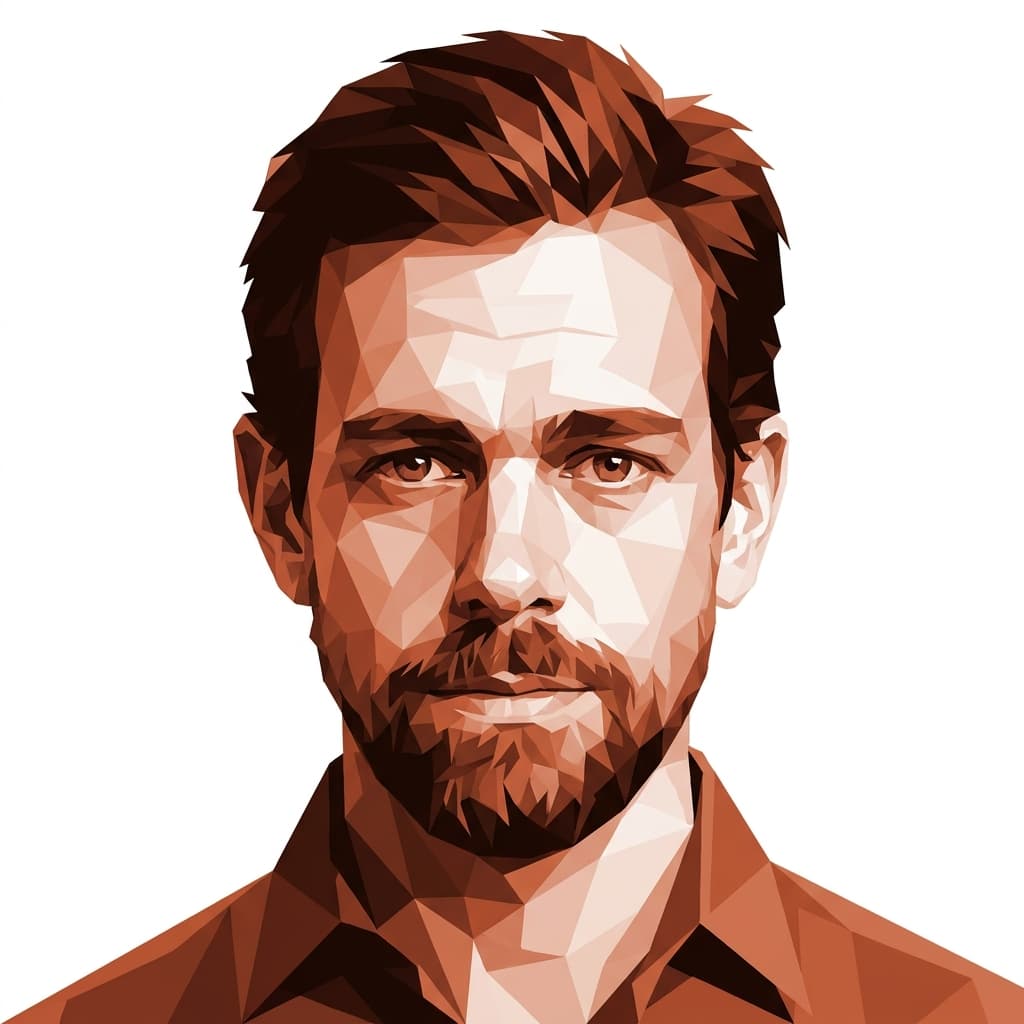
American rock songwriter and frontman of Tom Petty and the Heartbreakers, defining heartland rock for four decades.
Design
- Q56.3
- h60.3
- R50.2
- g25.3
- i46.3
- S33.4
- T15.2
- U57.4
- V37.1
- W64.6
- X52.3
- Y48.6
- Z7.5
Personality
- Q50.1
- h3.1
- R55.1
- g36.6
- i6.6
- S57.5
- T32.1
- U26.1
- V30.4
- W6.5
- X52.6
- Y57.3
- Z4.1
Tom Petty was a Generator — built with the kind of steady, masterful stamina that lets a person spend forty years making essentially one thing, the great American rock and roll song, without ever running out of gas. He grew up in Gainesville, Florida, met Elvis on a film set at ten, and from that moment forward there was never really another plan. The Heartbreakers, the band he built with Mike Campbell and Benmont Tench, became less a career than a vocation he kept saying yes to because his body kept saying yes back.
That full-bodied gut conviction showed up at every fork. When MCA tried to raise the price of Hard Promises to $9.98 in 1981, Petty refused, threatened to title the record $8.98, and won — a persuasive instinct sharpened on principle rather than ego. When his label was sold out from under him, he declared bankruptcy to break the contract. He had a nose for what was worth preserving and what had to evolve, and he used it as a kind of weapon, quietly, throughout a career that survived disco, hair metal, grunge, and three decades of label consolidation.
His songwriting profile read as 1/3 — investigator and experimenter, which is exactly how those records were made. Petty studied the canon obsessively — Dylan, the Byrds, Stax, every Sun single — then learned by trial and error in the garage and on the road. "American Girl," "Refugee," "The Waiting" — these were songs that arrived through the patient work of bringing order out of his own restlessness, often after weeks of frustration in the studio. He talked openly about the failed takes, the discarded albums, the house fire in 1987 that nearly took everything. Each one became material.
The voice on the records was deceptively simple — a flat Florida drawl that carried a sly understanding of what moves people to listen. He told stories about runaways and waitresses and small-town kids and made them feel like scripture. Underneath that was a real emotional architecture: the longing for something just out of reach that drove "Free Fallin'," the open-hearted resilience that kept showing up after heroin addiction, divorce, the loss of bassist Howie Epstein. He didn't perform suffering. He metabolized it and wrote the next song.
The Heartbreakers were family in the deepest, most loyal sense — the same core lineup, decade after decade, with Petty as the reluctant captain who'd rather have been a sideman. He had a quiet authority people kept handing him, whether it was the Traveling Wilburys (Dylan, Harrison, Orbison, Lynne — and him, the youngest by a generation) or his role mentoring acts from Stevie Nicks to the Replacements. He led by recognition, never by force.
In his last years he retreated more, pulling back to process and distill what he'd lived, giving fewer interviews, telling longer stories when he did. He died in October 2017, days after finishing the 40th anniversary tour his body had been warning him against. Forty years of yes, used all the way up.
Sources: biography · birth data

What do you and Tom Petty have in common?
Enter your birth details to find out