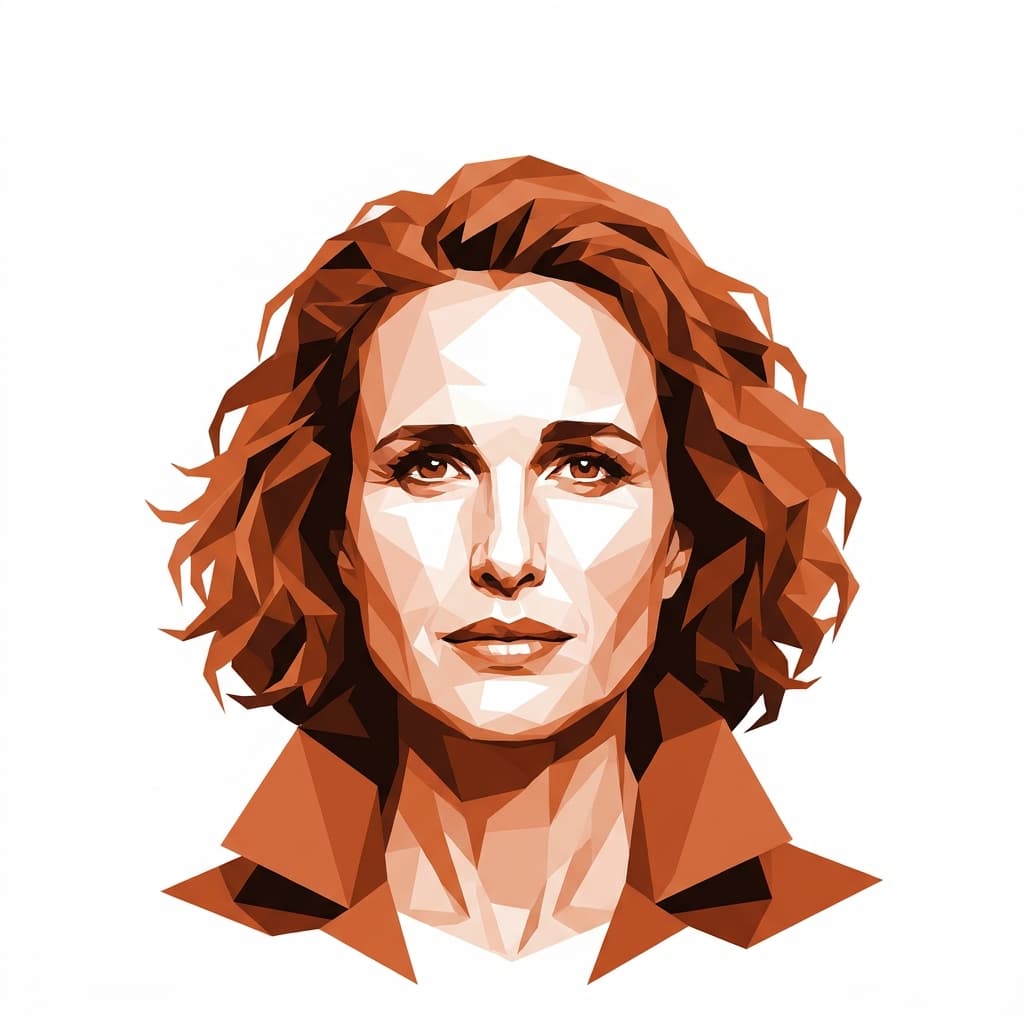
American actress and former model known for Groundhog Day, Four Weddings, and decades of understated screen presence.
Design
- Q41.1
- h31.1
- R37.6
- g28.5
- i27.5
- S38.1
- T19.5
- U26.6
- V50.5
- W26.6
- X33.3
- Y28.3
- Z59.2
Personality
- Q3.5
- h50.5
- R8.3
- g50.6
- i3.6
- S42.3
- T63.4
- U30.2
- V32.6
- W11.4
- X31.6
- Y28.2
- Z29.6
Andie MacDowell is a Generator — built for the long haul, with the kind of sustaining energy that lets a career unfold across forty years without ever quite burning out. She was discovered working behind a counter in a Wilson's House of Leather in Los Angeles, signed to Elite, and shipped to Paris before she had any particular acting ambition. The modeling came first because it answered — she didn't chase it. That pattern of letting the right thing arrive and then saying yes to it has shaped nearly every turn of her life, from Calvin Klein campaigns to the long L'Oréal run that made "because I'm worth it" synonymous with her face.
Her first film role, as Jane in Greystoke, was famously overdubbed by Glenn Close — a brutal early humiliation that would have ended a less patient person's acting career. Instead she went back to study with Harold Guskin, built the foundation she hadn't had, and reemerged with sex, lies, and videotape in 1989, winning the Independent Spirit Award. That trajectory is pure 5/1: get investigated and found wanting, retreat to build real expertise, come back as the authority. She has spoken often about how long it took her to feel she actually knew what she was doing, and how much she needed solitude and reflection to make sense of what the work was asking.
The films that defined her — Groundhog Day, Four Weddings and a Funeral, Green Card, Multiplicity — tend to cast her as the woman the protagonist is trying to deserve. She brings a warmth that makes a scene feel like somewhere you'd want to stay, and underneath it a quiet instinct about which men, which projects, which risks are actually worth the energy. She has said she turned down bigger blockbuster offers in the nineties because she wanted to be present for her three children in Montana rather than chase a bigger star tier. That decision — unfashionable then, obviously right in retrospect — is the kind her chart specializes in.
Her relationship with her face has been one of the more public negotiations of her career. She has been exceptionally good at selling things she genuinely uses — the L'Oréal partnership has run more than three decades because she actually looks like a woman who washes her face and sleeps well, not like a woman pretending to. During the pandemic she stopped dyeing her hair, and when stylists pushed back she insisted on keeping the silver, standing her ground on something that genuinely mattered to her. The resulting press cycle, and her second-act renaissance in Maid opposite her daughter Margaret Qualley, confirmed the instinct.
MacDowell talks openly about anxiety, about a complicated Southern childhood with an alcoholic mother, about the long emotional work of her two divorces — the kind of weather she has learned to sit inside until clarity shows up rather than deciding her way out of. She has described wanting to raise her kids differently than she was raised, and the pull she still feels toward caring for the people closest to her runs through every interview. In her sixties she seems less interested in being decorative and more interested in bringing order to the chaos of a long and unevenly treated life — teaching, mothering, working, and finally wearing her own hair.
Sources: biography · birth data
What do you and Andie MacDowell have in common?
Enter your birth details to find out