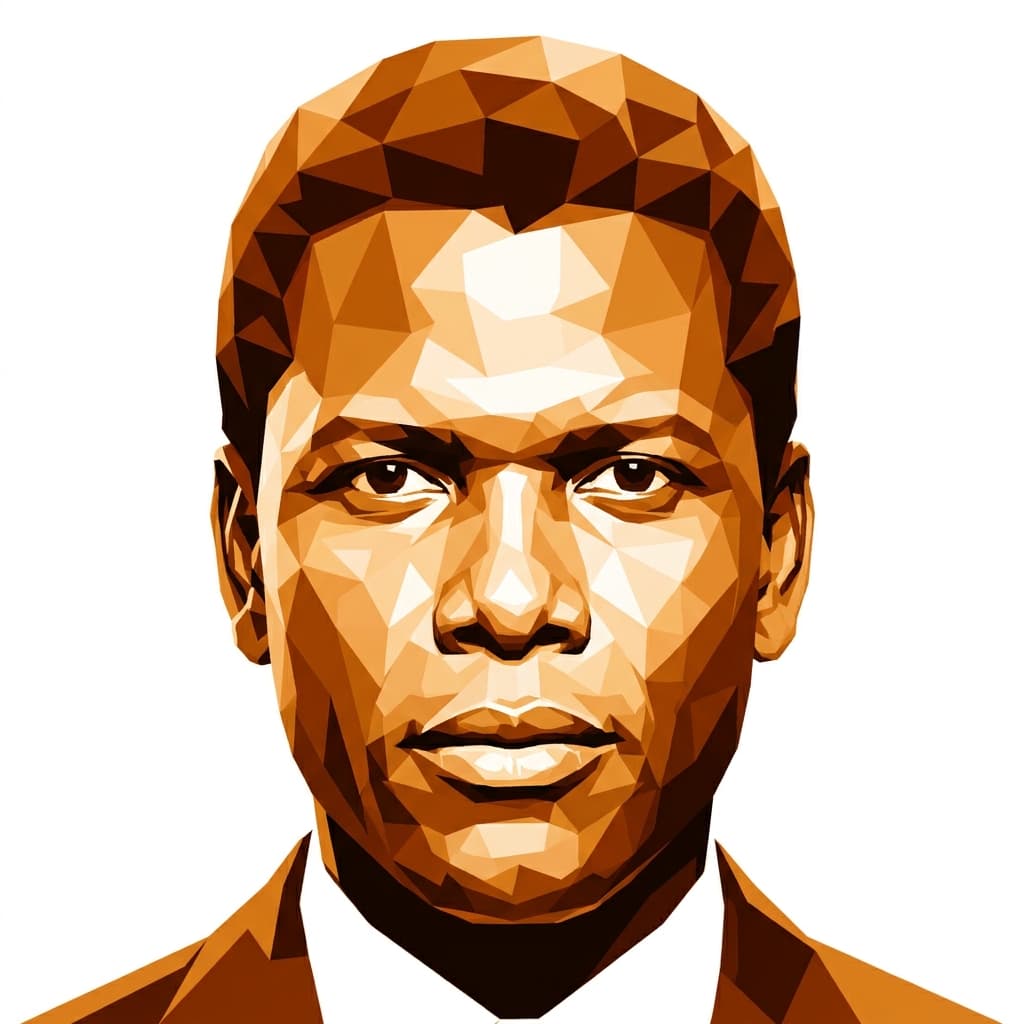
Trailblazing actor, director, and diplomat who reshaped how Black men were portrayed onscreen in mid-century Hollywood.
Design
- Q34.4
- h20.4
- R4.6
- g52.5
- i58.5
- S34.3
- T34.5
- U27.4
- V49.2
- W14.6
- X36.4
- Y29.3
- Z53.1
Personality
- Q55.2
- h59.2
- R57.5
- g52.2
- i58.2
- S22.2
- T36.1
- U8.6
- V37.3
- W9.2
- X36.6
- Y29.2
- Z39.5
Sidney Poitier was a Manifesting Generator — built for speed and stamina both, capable of moving through acting, directing, activism, and diplomacy without ever really stopping to pick one lane. Born two months premature in Miami to Bahamian tomato farmers and raised on Cat Island without electricity or running water, he carried that island stillness into every role he took. He arrived in New York at sixteen with almost no formal schooling, washed dishes, taught himself to read by working through newspapers with an elderly Jewish waiter, and walked into the American Negro Theatre with a thick Bahamian accent and was told to come back when he could speak. He came back.
His first big break came after a now-famous audition where he was rejected, went home, drilled the dialect with a radio for months, and returned transformed. That kind of patient, sustained focus on a single thing until it cracked open was a through-line: he didn't just want to act, he wanted to understand exactly how a line should land. The 2/4 profile fit him uncannily — long solitary hours of preparation, then a network of relationships (Harry Belafonte, Ruby Dee, Sidney Lumet) that opened every door he walked through. He rarely auditioned cold after the early years; the work came through people who had seen him work.
Poitier was famous for refusing scripts. In In the Heat of the Night, when Rod Steiger's character was originally meant to slap him without response, Poitier insisted his character slap back — and the moment became one of the most electric in American film. That instinct was the kind of certainty that needed to sit overnight before he'd commit; colleagues recalled him asking for time, sleeping on offers, coming back days later either fully in or quietly out. He turned down roles that felt demeaning even when his bank account argued otherwise, and the roles he did take he protected with a quiet, principled fierceness that defined a generation of Black leading-man performance.
He won Best Actor for Lilies of the Field in 1964 — the first Black man to do so — and used the platform exactly when and how the moment required, not before. He marched with King, raised money for SNCC, and in the same period kept making films that pulled difficult truths out of white audiences without ever shouting. His onscreen restraint was the strategy: he waited for the script, the director, the cultural moment to actually arrive before bringing his full weight to bear.
In the 1970s he pivoted to directing — Buck and the Preacher, Uptown Saturday Night, Stir Crazy — discovering he loved starting something where the rules hadn't been written yet. He later served as Bahamian ambassador to Japan, wrote three memoirs, and in his eighties was still drawing people in with that low, unhurried voice and unmistakable grace. When he died in 2022 at ninety-four, the tributes weren't about a filmography — they were about a posture. He had shown a country what dignity under pressure actually looked like, and he had done it by being exactly, stubbornly himself.
Sources: biography · birth data
What do you and Sidney Poitier have in common?
Enter your birth details to find out